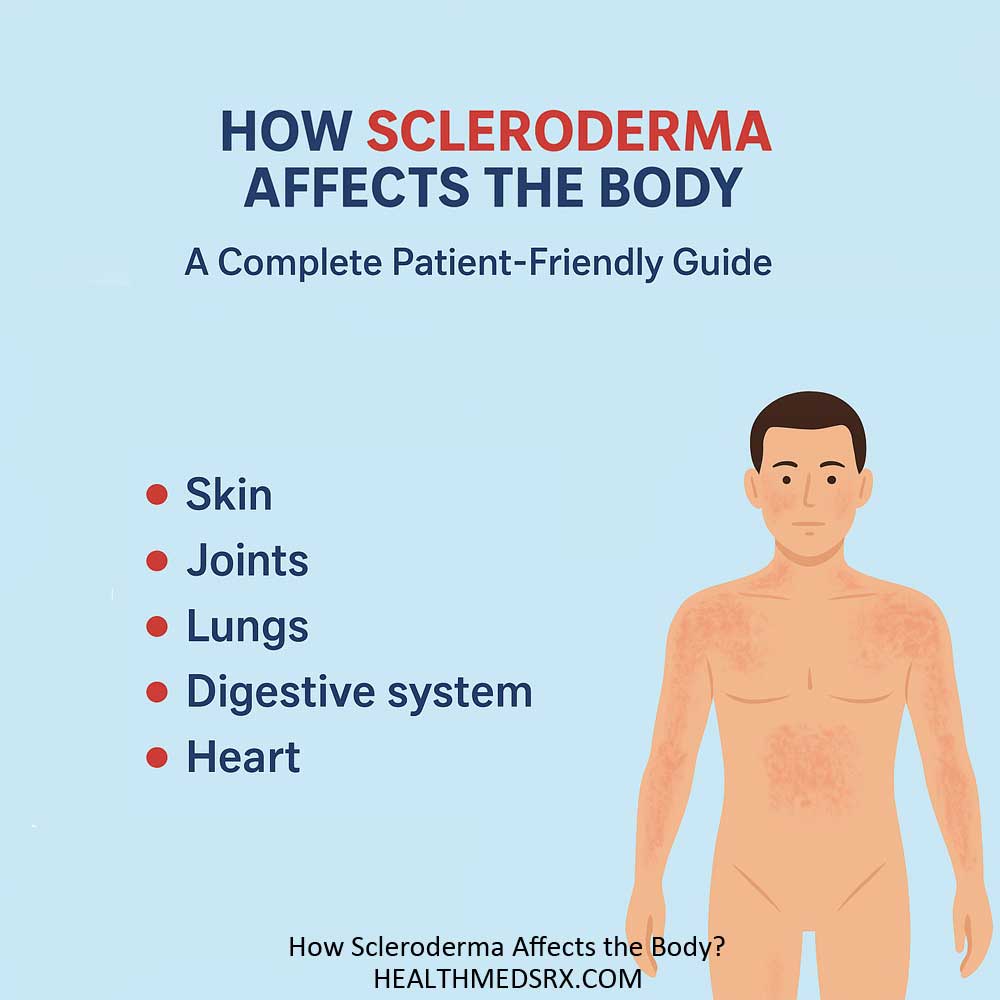

Scleroderma is an intricate autoimmune disease that is not only related to the skin. Although a lot of individuals are related to it being hard or tight skin, what happens is that scleroderma may affect different organs, daily mobility, emotional condition, and general health.
This is a patient-friendly information guide that will describe how scleroderma operates, the symptoms that should be observed, how this disease potentially impacts different body organs, and what treatment thematic approaches can be offered as of today. Learning to live with this condition is the initial step to proper control and improved living.
What Is Scleroderma?
Scleroderma, or systemic sclerosis, is an autoimmune disorder, which is disorder associated with excess collagen. Collagen is a protein that supplies the skin and tissues with structure. In case the immune system is overactive, it leads to inflammation and fibrosis, which will result in thickening and hardening of the skin and, in certain cases, internal organs.
Why Is It Considered an Autoimmune Disease?
The autoimmune diseases are characterized by the body wrongly attacking healthy tissues in the body. The body of scleroderma wrongly triggers the immune system, and it encourages the fibroblasts to secrete excess collagen that causes stiffening and scarring of tissues.
Types of Scleroderma
Understanding the types helps patients identify their symptoms more clearly:
1. Localized Scleroderma
Affects skin and may also include the underlying tissues. Includes:
- Morphea (round patches of hard skin)
- Linear scleroderma (bands of thickened skin along limbs or face)
2. Systemic Sclerosis
A severe form that affects internal organs.
- Limited cutaneous systemic sclerosis (lcSSc) — symptoms present slowly; they may also include Raynaud’s phenomenon, telangiectasia, and esophageal issues.
- Diffuse cutaneous systemic sclerosis (dcSSc) — rapid spread of skin thickening and higher risk of organ involvement.
Systemic Sclerosis Overview
In many cases, what we see is the skin, lungs, kidneys, heart and blood vessels affected by it. It goes from a mild case to one that is life-changing, but early diagnosis does improve results.
The Immune System’s Role in Scleroderma
The Autoimmune Attack
In scleroderma, what we see is the immune system causing inflammation, which in turn promotes collagen overproduction. This results in fibrosis, which is the thickening and hardening of tissues.
Immune Dysfunction in Scleroderma
Researchers believe the disease combines:
- Genetic predisposition
- Immune system dysregulation
- Environmental or infectious triggers
This is what we see in each patient that no two have the same set of symptoms or disease progression.
What Causes Scleroderma?
Although what we do know is that which:
- Immune malfunction
- Hormonal influence (women are more affected)
- Exposure to silica or solvent particles.
- Viral or bacterial triggers
- Family history of autoimmune conditions
In the case of this immune dysregulation, doctors use that information to choose targeted therapies.
Skin Changes and Symptoms
Skin in is the first which may present with this condition.
Skin Tightness & Thickening
Patients may notice:
- Shiny, tight skin
- Reduced flexibility
- Difficulty moving fingers
- Stiff facial expressions
This occurs due to collagen build-up beneath the skin.
Raynaud’s Phenomenon
Raynaud’s is a very common issue that causes fingers or toes to turn:
- White
- Blue
- Red
These colour changes happen in response to cold or stress. Raynaud’s is also a very early sign of systemic sclerosis.
Skin Discoloration
Some areas may appear:
- Lighter (hypopigmentation)
- Darker (hyperpigmentation)
Visible Signs of Scleroderma
Additional skin features include:
- Telangiectasia (small red blood vessels under the skin)
- Ulcers on fingertips
- Hard lumps under the skin (calcinosis)
These are different in degree for each person.
Scleroderma’s Impact on Internal Organs
Not in all cases do we see organ involvement, which is a good thing; when we do see it, though, it is serious. We do better to know about these changes, which enable early intervention.
1. Lung Inclusion
Scleroderma can affect the lungs through:
- Interstitial lung disease (ILD) fibrosis of lung tissue.
- Pulmonary arterial hypertension (PAH) is high pressure in the lungs’ blood vessels.
Symptoms include:
- Shortness of breath
- Dry cough
- Reduced stamina
Lung issue is a very large-scale complication that needs to be monitored routinely.
2. Digestive Tract Effects
The digestive tract is a common site that includes the esophagus.
Patients may experience:
- Acid reflux (GERD)
- Difficulty swallowing
- Bloating
- Constipation or diarrhea
- Poor nutrient absorption
These are a result of weak digestive muscles and reduced motility.
3. Kidney Complications
Scleroderma renal crisis is a medical emergency.
Signs include:
- Sudden high blood pressure
- Headaches
- Blurred vision
- Rapid kidney function decline
Early intervention can greatly reduce the risk of severe kidney damage.
4. Heart and Vascular Health
Scleroderma may affect:
- Heart rhythm
- Blood pressure
- Heart muscle stiffness
- Inflammation of the heart lining
The symptoms include chest pain, the absence of which is a shortage of breath and leg or foot swelling.
Understanding the types of organs to which the disease is associated will also help patients recognize the early symptoms and pursue the treatment as soon as possible.
Everyday Challenges
Living with scleroderma is a day-to-day struggle that goes unnoticed by many.
Mobility Problems
Skin tightening around joints can reduce flexibility, causing difficulty with:
- Gripping objects
- Walking long distances
- Bending fingers
- Opening jars
Muscle atrophy from decreased blood flow and inflammation.
Joint Pain & Stiffness
Inflammation of joints and connective tissues can lead to:
- Swelling
- Pain
- Reduced movement in the hands and knees
This is a greater issue in the morning and also in cold weather.
Fatigue
Fatigue is a very present and often misdiagnosed issue, which may result in:
- Immune activation
- Poor sleep from pain or reflux
- Reduced lung function
- Stress and emotional strain
Impact on Quality of Life
Everyday activities like cooking, typing, dressing, or exercising may become more difficult. This can affect:
- Confidence
- Independence
- Mental well-being
Nevertheless, patients can lead good, productive lives through appropriate strategies and support that are used.
Treatment Options & Symptom
Although there isn’t a cure, these treatments focus on the amelioration of symptoms, prevention of organ damage, and improvement of quality of life.
Medications
Treatment options are different for different people, but may include:
- Immunosuppressants: Reduce immune overactivity.
Examples: methotrexate, mycophenolate, cyclophosphamide. - Anti-inflammatory Drugs: Manage joint pain and swelling.
- Vasodilators: Improve your blood flow and see Raynaud’s symptoms reduce.
- Proton Pump Inhibitors: Treat acid reflux and esophageal issues.
- Antifibrotic Medications: Slow skin thickening and lung scarring.
Physical Therapy
Physical therapy helps maintain:
- Joint mobility
- Muscle strength
- Flexibility
- Hand function
Occupational therapists can assist patients with daily tasks.
Lifestyle Changes
Small daily habits make a big difference:
- Staying warm to prevent Raynaud’s attacks
- Eating smaller meals to reduce reflux
- Stretching to improve joint movement
- Avoiding smoking
- Managing stress with meditation or yoga
Regular Monitoring
Frequent health check-ups help to track
- Lung function
- Heart health
- Kidney status
- Digestive issues
Early detection of complications greatly improves outcomes.
Coping Strategies and Support Resources for Living with Scleroderma
Managing scleroderma is more than just taking medications. Also very much a role for emotional and social support.
Support Groups
Connecting with others reduces isolation and also provides:
- Shared experiences
- Practical tips
- Emotional encouragement
Online support groups and regional scleroderma associations run support meetings.
Mental Health Support
Long-term illness may cause:
- Anxiety
- Depression
- Mood swings
- Stress
Counselling, therapy, or support from a mental health professional can also increase.
Supporting Loved Ones
Caregivers and family members can:
- Learn about the disease
- Offer emotional support
- Understand limitations
- Encourage medical follow-up
- Respect physical boundaries
Daily Coping Tips
- Use adaptive tools for tasks.
- Plan rest periods
- Keep a symptom journal.
- Celebrate small victories
- Build a strong healthcare team.
Patients who stay in the know and have support do so much better.