


Most People Think Liver Disease Happens Only to Heavy Drinkers. That’s No Longer True.
The misconception has been around for a long time, but it holds only for some conditions. Today doctors have noticed different, more interesting phenomena—the emergence of fatty liver disease in people who rarely or never consume alcohol.
Many of these individuals are unaware of the fact that they have fatty liver disease until they see their ultrasound report or get a blood test done for some other reason. They feel perfectly healthy, and their body does not give signals that there is a lot of fat accumulated in their liver.
The liver is the organ responsible for over 500 functions. Its responsibilities include filtering toxins from the body and storing vitamins and proteins as well as converting food into energy. The liver has an unbelievable ability to heal itself.
Nevertheless, when excess fat builds up, this ability diminishes. If ignored fatty liver can lead to inflammatory processes, cirrhosis, liver failure, and even liver cancer.
The good news is that fatty liver is usually avoidable and can actually be reversed if discovered in time. By understanding how the fat develops in the liver and preventing any permanent impacts before they manifest, one can make a big difference.
The purpose of this article is to guide you through everything you should know about fatty liver causes, symptoms, diagnosis, treatments, diet, and how to ensure your liver remains safe in the future.
What Is Fatty Liver Disease?
Fatty liver disease occurs when a significant amount of fat is stored inside liver cells. It is normal to have a small amount of fat but if it exceeds 5% of the total liver weight, the diagnosis of fatty liver disease is possible.
This condition, however, does not appear overnight. Fatty liver develops gradually over a period of time (a few months or years) and in the first stages of the disease, a liver can fully perform its functions meaning most people do not experience any symptoms.
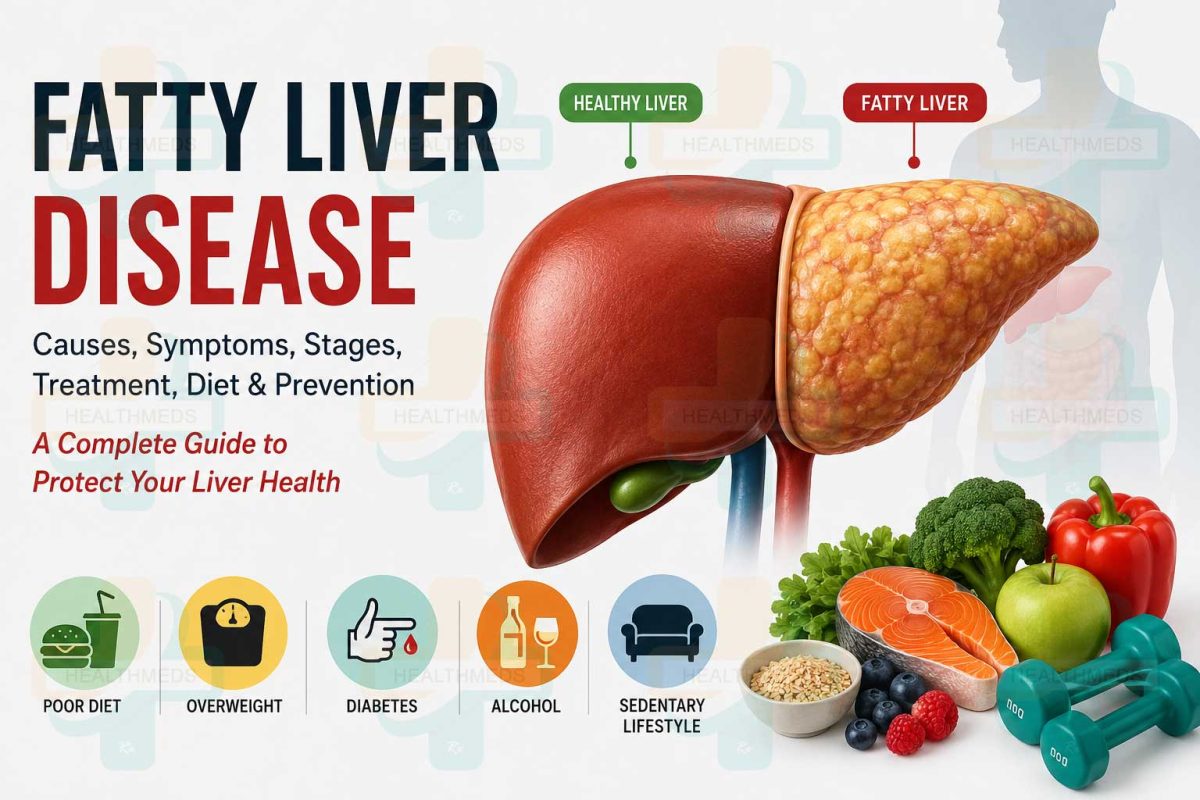 There are two main types of fatty liver disease:
Alcoholic Fatty Liver Disease (AFLD)
This is caused by prolonged heavy drinking. Alcohol has an impact on liver function and fat metabolism leading to lipid accumulation in hepatic cells.
Non-Alcoholic Fatty Liver Disease (NAFLD/MASLD)
This is diagnosed in individuals who consume no or very little alcoholic beverages. This condition is mainly associated with obesity, type 2 diabetes, insulin resistance, high cholesterol, and metabolic syndrome. Many specialists refer to this condition as Metabolic Dysfunction-Associated Steatotic Liver Disease (MASLD) as this name better describes its mechanisms.
It should be noted that while the causes of AFLD and NAFLD are different, these two types of liver disease may lead to similar complications.
What Causes Fatty Liver Disease?
Fat gets deposited in the liver when the body produces or stores more fat than the liver is able to clear away efficiently.
There are various predisposing factors:
- Obesity
- · Diabetes type 2
- Insulin resistance
- High levels of cholesterol/triglycerides
- High blood pressure
- Alcohol consumption
- Consumption of a diet containing a lot of sugar and processed foods
- Inactive lifestyle
- Medicines
- Rapid weight loss/weight gain in some cases.
- Polycystic ovary syndrome (PCOS)
- A history of metabolic diseases in a family.
Often, fatty liver disease develops because several of these factors occur together rather than from a single cause.
Signs of Fatty Liver Disease
One of the major difficulties with fatty liver disease is that during the initial stages, it typically does not show any symptoms.
Once symptoms do show up, they might include:
- Chronic fatigue
- Mild pain or fullness in the upper right part of the abdomen
- Unexplained fatigue
- Trouble concentrating
- Loss of appetite
As the liver becomes further damaged, more signs may show up, such as:
- Yellow skin or eyes (jaundice)
- Swelling in the abdomen
- Swollen legs or ankles
- Easy bruising
- Severe fatigue
- Confusion with the progression of the disease
As symptoms usually arise late, regular check-ups are necessary for patients with risk factors.
The Phases of Fatty Liver Disease
The onset of fatty liver disease is a gradual process.
Stage 1: Non-Alcoholic Fatty Liver Disease
Fat accumulation in the liver begins without any significant inflammatory process occurring. It is at this time that the disease can easily be reversed through changing one’s way of life.
Stage 2: Non-Alcoholic Steatohepatitis
Fat build-up causes the inflammatory process and will injure the liver cells. The risk of progressing in the development of the disease increases in this stage.
Stage 3: Fibrosis
Continuous inflammation results in the formation of scar tissues around the liver. The liver is still able to perform its functions but at the onset of this stage scar tissue disturbs the configuration of the liver.
Stage 4: Cirrhosis
A large amount of scar tissue causes damage to the liver. Cirrhosis may lead to liver failure, internal bleeding, and an enhanced risk of liver cancer.
Identifying fatty liver disease at an early stage is a good chance to stop the disease development before it results in irreversible effects.
How Is Fatty Liver Disease Diagnosed?
Fatty liver disease is usually diagnosed with the help of medical history, physical examination, blood tests, and imaging studies.
Tests for liver function: Frequently conducted medical tests are
- Glucose tests
- Tests for cholesterol and triglycerides
- Ultrasonography
- CT scans and MRIs when needed
- A FibroScan for measuring the rigidity of one’s liver
- Liver biopsy in case the diagnosis is difficult
Your doctor may look for other conditions that contribute to liver disease.
Is Fatty Liver Disease reversible?
Perhaps.
The liver can heal remarkably well before it sustains too much damage.
For the disease to be treated, it is necessary to eliminate its causes.
Most patients enjoy wonderful results after:
- Gradual loss of excess pounds
- Increased physical activities
- Management of one’s diabetes
- Lower cholesterol levels
- Abstinence from alcohol
- Better eating habits
Nevertheless, it is important to understand that advanced cirrhosis cannot be reversed.
Options for Fatty Liver Treatment
There are multiple ways to cure fatty liver disease in general, but treatment is based mainly on the cause and how serious the damage to the liver is.
The treatment may involve the following methods:
Changes in Lifestyle
This is among the very basic forms of treatment for many patients.
Weight loss
Losing around 5 to 10 percent of weight can help significantly reduce liver fat and inflammation in people with extra weight.
Management of Underlying Conditions
Proper control of diabetes, cholesterol, and hypertension is important.
Reduction of Alcohol Intake
In people with alcohol-related fatty liver disease, avoiding the use of alcohol will help to prevent damage.
Medications
Medical practitioners may prescribe medications to manage the related conditions such as diabetes, high cholesterol, and obesity. Different approaches are applied depending on an individual’s health status and needs.
The Importance of Diet in the Management of Fatty Liver Disease
Diet is also essential in the prevention and treatment of the condition.
Preferred foods that promote liver function include:
- Fresh vegetables
- Fruits in moderation
- Whole grain products
- Lean proteins
- Seafood high in omega-3 fatty acids
- Beans
- Nuts
- Olive oil
- Drinking enough water
Foods to limit include:
- Sweetened drinks
- Packaged snacks
- Junk food
- Deep-fried food
- Refined carbs
- Red meat
- Processed meats
- Alcohol
Rather than following a short-term diet, aim for sustainable eating habits that support overall metabolic health.
Does Exercise Have a Role in Treatment?
Definitely.
Regular physical activity reduces liver fat, boosts insulin sensitivity, and aids in maintaining a healthy weight.
Recommendations include:
- At least 150 minutes of moderate physical activity per week
- Strength training at least two times a week
- Minimizing prolonged sitting
Daily physical activity, like walking, can also have positive effects on the liver.
Potential Complications
If left untreated, fatty liver disease can lead to:
- Liver inflammation
- Fibrosis
- Cirrhosis
- Liver failure
- Liver cancer
- Higher chances of heart diseases
- Kidney disorders in some people
People with fatty liver disease are actually at a greater risk of developing heart disease than of having serious liver complications, which makes it imperative to take care of one’s general health.
Fatty Liver Disease Prevention
Adopting simple measures can greatly reduce your risk.
- Keep your weight at a healthy level.
- Be physically active.
- Have a balanced diet.
- Limit alcohol consumption.
- Manage your blood sugar and cholesterol levels.
- Do not smoke.
- Get regularly checked by your doctor if you have any risk factors.
- Follow your doctor’s instructions in case of chronic illness.
Many small changes can yield better results than one big change made once in a while.
Common Concerns regarding Fatty Liver
Is fatty liver disease a serious condition?
It can be. Early-stage fatty liver disease is usually curable, but it can lead to cirrhosis and liver failure if no intervention is made.
Is it possible for a thin person to get fatty liver disease?
Yes, but while obesity is a prominent risk factor, people of normal weight can develop fatty liver disease due not only to genetics, metabolic disorders and medications, but also due to unhealthy eating habits.
What are the early symptoms?
No. Many people remain symptom-free for a long time which is why the illness is often only discovered during medical check-ups.
Can fatty liver disease be treated?
It is possible to reverse fatty liver disease at an early stage with the help of lifestyle changes and proper treatment of conditions causing fatty liver.
Should I stop consuming alcohol if I have this disease?
Alcohol consumption should be avoided for those suffering from alcohol-related fatty liver disease, while those with non-alcoholic fatty liver disease should address the question of alcohol intake with their healthcare practitioner as a general rule regarding alcohol is to limit it altogether.
Protecting Your Liver Starts Today
Fat liver disease is one of the most common disorders of the liver that exists worldwide; however, there are still many people who are not sure that they suffer from it. Since it often develops silently, people need to be diagnosed by means of routine healthcare procedures, especially those people who have diabetes, obesity, high cholesterol, or some other metabolic risk factors.
Fortunately, fatty liver disease does not always leave irreversible liver damage. In many cases, a proper diet, regular physical activity, weight control, and treatment of the diseases that might cause fatty liver disease can improve the condition.