
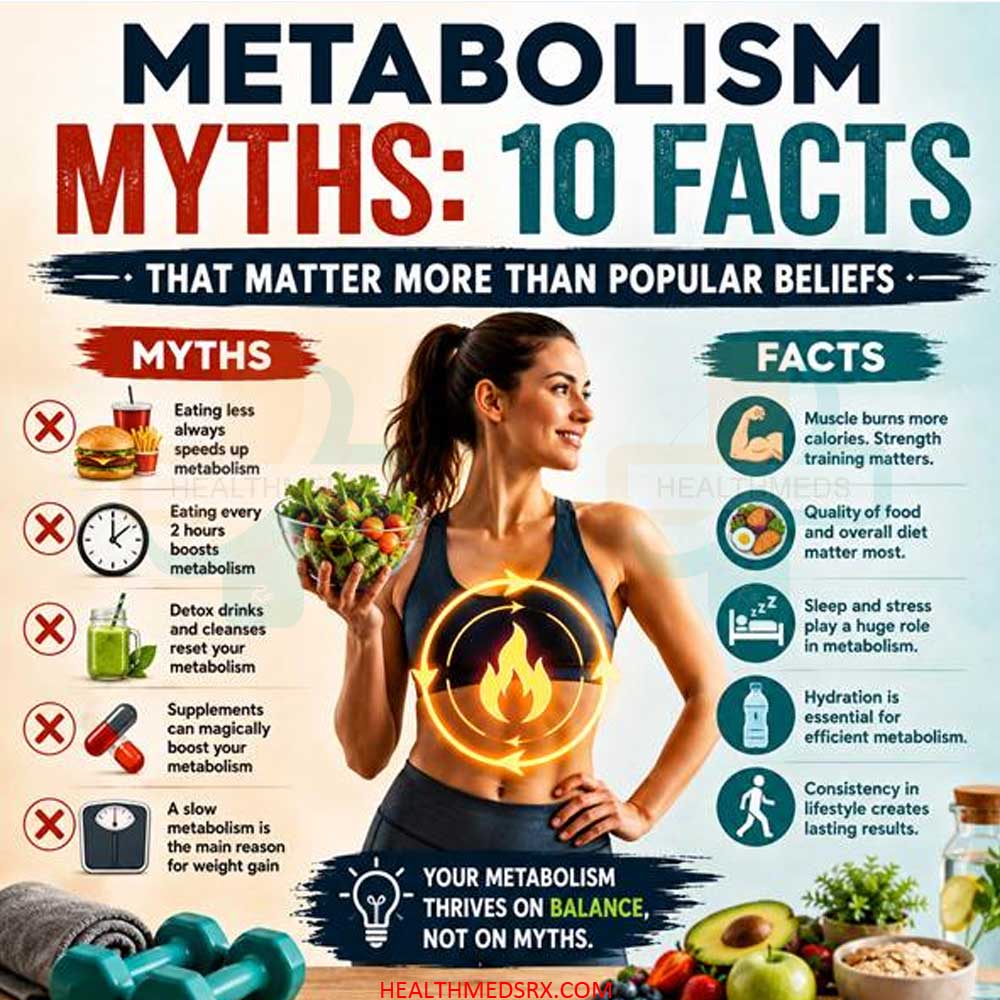

Many people tend to blame their metabolism when they are struggling to lose weight or have less energy than usual. You’ll hear things such as “My metabolism is broken” or “Eating every two hours will keep my metabolism going. There are lots of suggestions available, however many of them have dated or incorrect.
Metabolism is not a switch! A complex network of biological mechanisms which allow for the maintenance of bodily processes during normal life. When it comes to making healthy decisions it’s important to understand the truth.
Let’s bust some myths and replace them with science when it comes to metabolism.
10 Popular Myths about Metabolism
Myth #1: Slow Metabolism That is the Main Cause of Weight Gain.
It is believed that many people suffer from slow metabolism which is the reason for their extra kilograms. However, metabolism is just one of these areas.
Body weight is influenced by daily calorie intake, physical activity, sleep quality, stress level, hormones, age and muscle mass. Some individuals burn calories slightly more rapidly than others, but it’s far less than many people realize.
The guideline to lose weight isn’t to blame on metabolism alone, but to concentrate on sustainable lifestyle habits.
Myth #2: Certain Foods will Make a Huge Difference in Revving Up your Metabolism.
There are foods that are touted as metabolism boosters, such as green tea, spicy peppers, apple cider vinegar and lemon water.
The truth is that while eating and digesting there are some foods that make a small amount and for a brief period of time that will burn calories.
There is no single food that can change your metabolism. The amount of time a person spends eating has more impact than each of the items he or she consumes.
Eat a healthy diet with plenty of vegetables and fruits, lean protein, whole grains, healthy fats, and plenty of water instead of depend on “magic foods.
Myth #3: Eating Every 2 hours Increases Metabolism.
This guidance has been used for many years.
Studies indicate that there is little effect on the daily number of calories burned when meal frequency is varied. The size of meals and the number of meals eaten doesn’t really matter, as long as calories are the same and the quality of the nutrition is the same.
The ideal meal timing is the one that works with you and your nutritional requirements.
Myth #4: Skinny People Always Have Faster Metabolism.
People think that those who are skinnier burn a lot more calories.
The larger the body the more energy they may need, unsurprisingly because there is more tissue to support. This implies that larger people tend to expend more calories in the resting condition than smaller do.
The difference is typically a result of diet, exercise, body composition, genetics and lifestyle, not size.
Myth #5: Your Metabolism Stops Decreasing After You’re 30.
There is a difference for age but not that significant.
As one gets older, the gradual loss of function and strength is due to a natural decrease of muscle mass and activity.
Strength training, getting plenty of protein and keeping physically active all contribute to maintaining muscle and a healthy metabolism well into old age.
Myth #6: Cardio is the only exercise that can improve metabolism.
While running, biking and swimming are good for the heart and burning calories, they are not all the answers.
Strength training is also a valuable exercise. Lean muscle burns more calories, even when you’re at rest, which boosts the energy demands of the body.
Strength training along with aerobic exercise is the best approach to long-term metabolic health support.
Myth #7: Never skip breakfast, as it will ruin your metabolism.
It is believed that breakfast is really the most vital meal of the day.
For most people breakfast is a positive experience, but not getting it one or two times won’t make a lasting effect.
Others may do better with a normal morning meal, and some people just naturally don’t like to eat breakfast. The key is to get enough nutrients all day long- not necessarily at specific times.
Myth #8: Detox Diets Resets Your Metabolism.
Often juice cleanses and detoxification programs guarantee to kick your metabolism into a new gear.
Your liver, kidneys, lungs and digestive system are already working around the clock to detoxify your body.
An extreme detox diet may lead to substantial weight loss, which is likely to be caused by a reduction in water and calorie intake, but won’t guarantee long term weight loss or improved metabolism.
Just like before, short-term cleanses don’t work as well as maintaining a healthy lifestyle.
Myth #9: Metabolism is the only factor that Influences Energy Levels.
If you feel fatigued, it doesn’t necessarily mean that you have a slow metabolism.
Low energy can result from poor sleep, dehydration, nutritional deficiencies, chronic stress, mental health issues and some medical conditions.
If despite a healthy lifestyle, fatigue persists it is advisable to seek medical help to determine if fatigue is caused by anything.
Myth #10: Supplements can Quick Fix.
You’ll find many supplements claiming to be able to “fuel” your metabolism.
Not all of these products are based on science and a few may contain ingredients that cause side effects such as elevated blood pressure, nervousness and a rapid heart rate.
Do the things which are proven to make people’s whole body healthy as opposed to depending on costly supplements.
So, what REALLY helps a Healthy Metabolism?
Keep your eyes on the positive and not on the negative.
- Build Muscle: To keep lean muscle tissue, strength train two to four times a week.
- Eat Enough Protein: Protein is known to take longer to be digested than carbohydrates and fats, and is also capable of helping to maintain muscle tissue following exercise.
- Stay Physically Active: Moving every day is just as important as structured exercises. There are also activities that contribute to total energy expenditure such as walking, gardening, climbing stairs, and household activities.
- Prioritize Sleep: Adults usually sleep for 7-9 hours and get good sleep. Sleep deficits may disrupt hormones that influence energy balance, appetite and hunger.
- Manage Stress: Long-term stress can have an effect on appetite, hormones and energy levels. Taking breaks, practicing mindfulness, enjoying hobbies and regular exercise will help minimize its effects.
- Stay Hydrated: The body contains many chemical reactions that occur in the water of the body. Dehydration, even slight, can impair physical and mental function.