
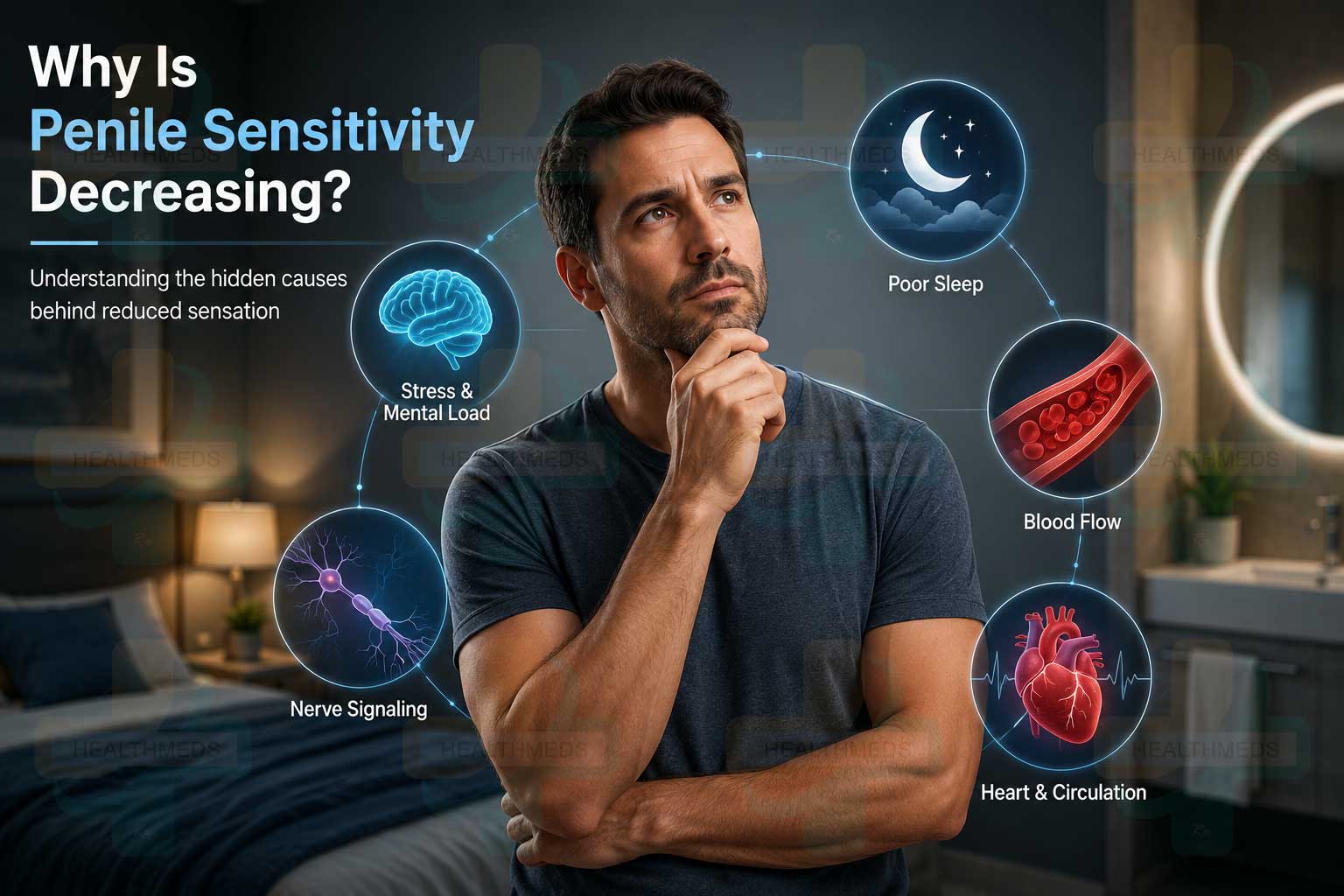

Penile Sensitivity- What is it? Well! many men first realize the problem not when they feel pain or something catastrophic happening to their body. They simply think during sexual intercourse:
“Why does it feel different?”
It may be hard to notice the difference: the penis does not feel as sensitive as before, stimulation is not as effective, and it takes longer to reach an orgasm. The sensations are still there, but they are not as bright as they used to be.
What is difficult about the problem is that the reduction of penile sensitivity happens gradually, so men often do not care about it, thinking that it is just stress, age, or “something like that”.
As a result, they miss potential problems related to the nervous system, blood circulation, hormones, or overall health.
Here is the question that surprises many people: What if declining penile sensation is not primarily a problem of the penis?
In many cases, the penis is the first body part to reflect the changes happening elsewhere.
The present article outlines the main causes of decreased penile sensitivity, diminished penile sensation, and reduced feeling in the penis while concentrating on the most overlooked factors.
The Difference Between “Less Sensitive” and “Numb”
Many men make use of these terms as synonyms; however, in fact, from a medical point of view, they stand for very different concepts.
- Less sensitivity: sensation is there but weaker than before.
- Less sensation: stimulation needs to be stronger than previously.
- Penile numbness: sensation is almost or completely absent.
- Delayed orgasm: there is pleasure, but it takes longer to reach climax.
The difference is essential because there are different problems with numbness than those with less sensitivity.
One way to think of it is this: if a radio is quieter, the music is still being broadcast into the speaker. If the radio is silent, the signal might not be getting through.
The Most Overlooked Cause: Your Brain Is Filtering the Sensation
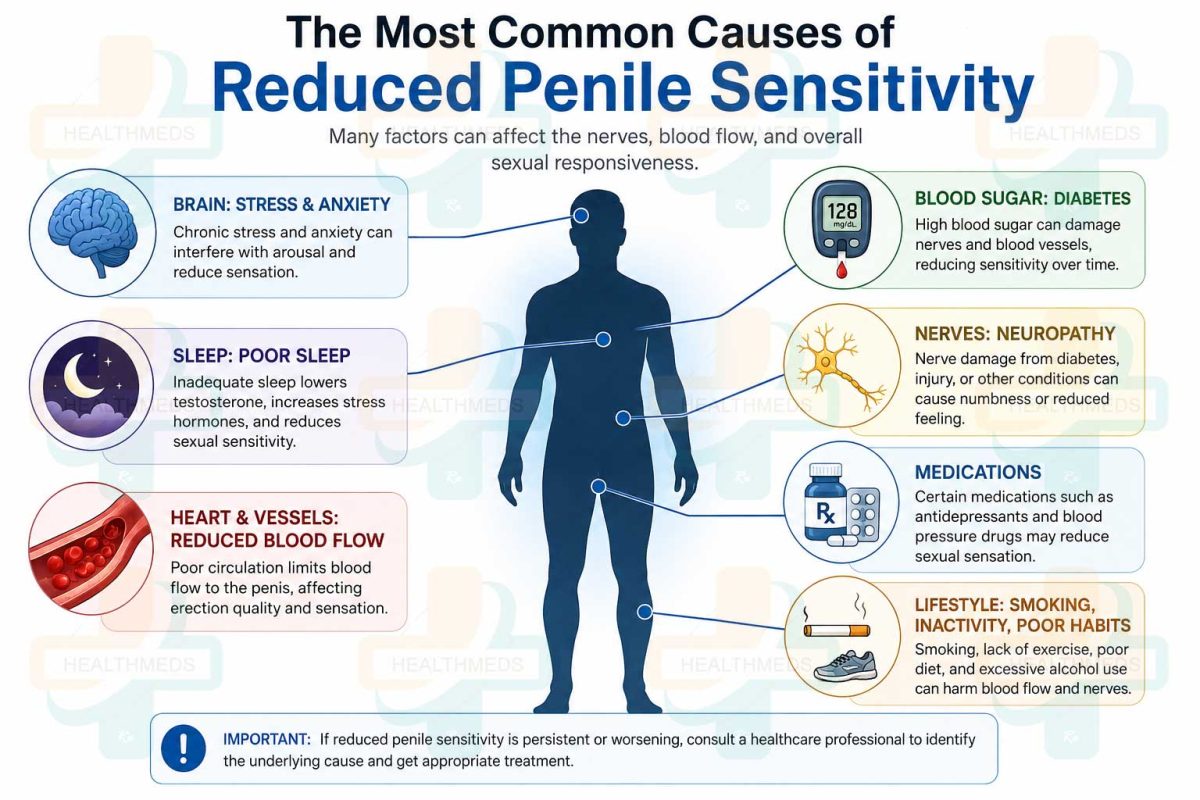
Causes Of Penile Sensitivity
Many men assume that sensitivity is determined only by the nerves in the penis. In reality, sensation is a two-part process:
- The nerves have to send the signals.
- The brain must notice and process those signals.
If there is stress, anxiety, distractions, or emotional strain present, it may come as a surprise that the brain can become unable to appreciate pleasurable sensations.
This is why some men say their penile sensitivity decreases during times of:
- Work stress
- Relationship tension
- Financial pressure
- Poor sleep
- Performance anxiety
Although the nerves may work properly, the experience can feel muted.
The main hint would be inconsistency. If the penile sensitivity varies from normal at times and sometimes seems reduced, that makes it less likely the nerves are damaged permanently.
Sleep: The Health Metric Men Ignore Until Their Body Stops Cooperating
Ask a man how many hours he sleeps, and his answer usually carries the sound of a victorious achievement rather than a health statistic.
Chronic lack of sleep can have a negative impact on:
- Testosterone production
- Stress hormones
- Mood
- Energy
- Sexual responsiveness
- Perception of pleasure
Various studies substantiate that poor sleep decreases sexual desire and damages sexual functioning. However, less attention is given to the fact that poor sleep can inhibit the vivid feeling of sensation.
If you experience diminished penile sensitivity followed by fatigue, lack of morning erections, irritability, or inability to concentrate, you should consider the value of sleep.
The body is not designed to function efficiently when constantly running on low energy.
Friction and Overstimulation: A Temporary Problem That Feels More Serious Than It Is
This represents one of the more frequently occurring, yet rarely remarked upon, causes of short-term penile sensitivity.
Excessive friction, particularly if lubrication is absent, causes skin irritation and hypersensitivity of the glans.
In some cases, men find out that they need to use stronger stimulation to achieve the same sensation necessary for successful ejaculation.
The most important aspect of this problem is timing.
- Sensitivity has decreased after engaging in some sexual activity or masturbation.
- The glans, particularly after engaging in a long session of sexual activity, often feels dry, irritated, or somewhat tender.
- Penile sensitivity recovers after longer periods of reduced friction.
Fortunately, losing penile sensitivity is not synonymous with injuring the nerves. Rather, it can be compared to the loss of sensitivity of the fingers after repeated mechanical pressure.
Blood Flow: The Hidden Connection Most Men Never Consider
Here is something that should be paid more attention to:
Healthy sensation depends partly on healthy circulation.
The penile organ has a complex network of blood vessels and nerves. Reduced blood circulation means weaker erections along with decreased penile sensitivity.
Various factors can cause this condition:
- Smoking
- Hypertension
- High cholesterol levels
- Obesity
- Diabetes
- Physical inactivity
- Cardiovascular disorders
Many men concentrate on the quality of the erection but do not pay any attention to sensations they feel.
A useful question is:
“Has the penis also felt less warm or less responsive overall?” If the answer is yes, vascular factors may be contributing.
Diabetes: The Cause That is Sometimes Easy to Overlook
Of the many medical causes of chronic loss of sensitivity in the penis, diabetes ranks near the top.
Long-term exposure to high sugar levels can lead to injury to the smallest blood vessels and nerves. As with any form of nerve injury, symptoms may begin subtly.
Common warning signs are:
- Numbness or tingling of the feet
- Excessive thirst
- Urinating frequently
- Slow recovery from wounds
- Problems achieving an erection
- Progressively reduced penile sensation
For many men, loss of penile sensitivity is more than just a sexual issue. In fact, in some cases it may represent early warning of other metabolic and neurological issues.
This is one reason why healthcare professionals recommend blood sugar testing when men show signs of unexplained changes in genital sensation.
The Medication Factor: Sometimes the Cause Is in the Medicine Cabinet
Certain medications may have an impact on sexual pleasure, arousal, or orgasms.
Most frequently implicated medications are:
- Anti-depressants, particularly SSRIs
- Certain anti-anxiety medications
- Some blood pressure medications
- Certain medications used to treat chronic pain and nerve conditions
Men usually experience such sexual problems weeks after the medication is started but may not realize that they are correlated.
The point of interest is that it is unwise to discontinue taking prescribed medications on one’s own. Instead, it is important to consult the prescribing doctor to know about possible sexual side effects.
Aging: What Is Normal and What Is Not?
Aging is frequently pointed to as the cause for every change occurring in sexual functioning, but this is an overly simple explanation.
What may change slowly with age:
- Gradual decrease in pace of arousal
- Greater time required to reach orgasm
- Mild decrease in sexual sensitivity
- Variations in the hardness of erections
What normally does not directly relate to change with aging:
- Sudden loss of feeling in the penis
- Rapid progression in penile sensitivity
- Complete lack of penile sensation
- Significant penile sensory changes over a short time period
It means aging might cause a reduction in performance quality rather than a complete loss of sensation in the penile organ.
Cycling, Sitting, and Nerve Compression
Prolonged pressure applied to the perineum causes the compression of nerves as well as blood vessels.
Males who spend long hours doing the following:
- Cycling
- Motorcycling
- Working long hours while sitting
- Driving for long hours
Can sometimes suffer from a temporary decrease in penile sensation.
Typically, the symptoms appear after the activity is completed, and improve dramatically after getting rest.
“Is Decreased Penile Sensitivity Permanent?”
In most situations, it does not have to be permanent.
There are many temporary factors responsible for it, connected to stress, reduced sleeping hours, friction, or nerve compression, often showing improvement after taking adequate rest.
One of the main mistakes is that many men think that if there is decreased penile sensitivity, they assume it means serious nerve injury. Another common mistake is believing that the problem is just psychological when it actually stems from some medical conditions.
When Reduced Penile Sensitivity Should Not Be Ignored
If you encounter the following sensations, it is advisable to consult your medical provider:
- Sudden sensory inability in the penis
- Total numbness
- Incidence of worsening symptoms over a span of weeks or months
- Erectile dysfunction occurring at the same time
- Numbness in other parts of the body
- Backache accompanied by genital sensory changes
- Symptoms presenting themselves after undergoing surgery or prior injury to the pelvic area
- Diabetes or a known neurological illness
The above symptoms call for an explanation for possible nerve, vascular, spinal, or metabolic problems.
In case you encounter erectile issues, there are medications available for treatment such as Kamagra 100mg, Cenforce 100mg, Fildena 100mg, etc. that could help you but only after getting advice from a professional medical practitioner.
What Decreased Penile Sensitivity May Be Trying to Tell You
Reduced sensitivity of the penis is typically understood as an individual sexual health issue, but it can have many implications when examined from a larger health perspective.
Most of the time in men, there is not one specific condition at play. Instead, it is the combination of various smaller influences such as:
- Chronic stress
- Insufficient sleep
- Physical inactivity
- Poor blood circulation
- Abnormal metabolism
- Side effects of medications
- Continual mechanical irritation
The penis is particularly sensitive to the specific changes in blood flow, nerves, and physical state of the body, which is why sensory changes can often occur before any other symptoms.
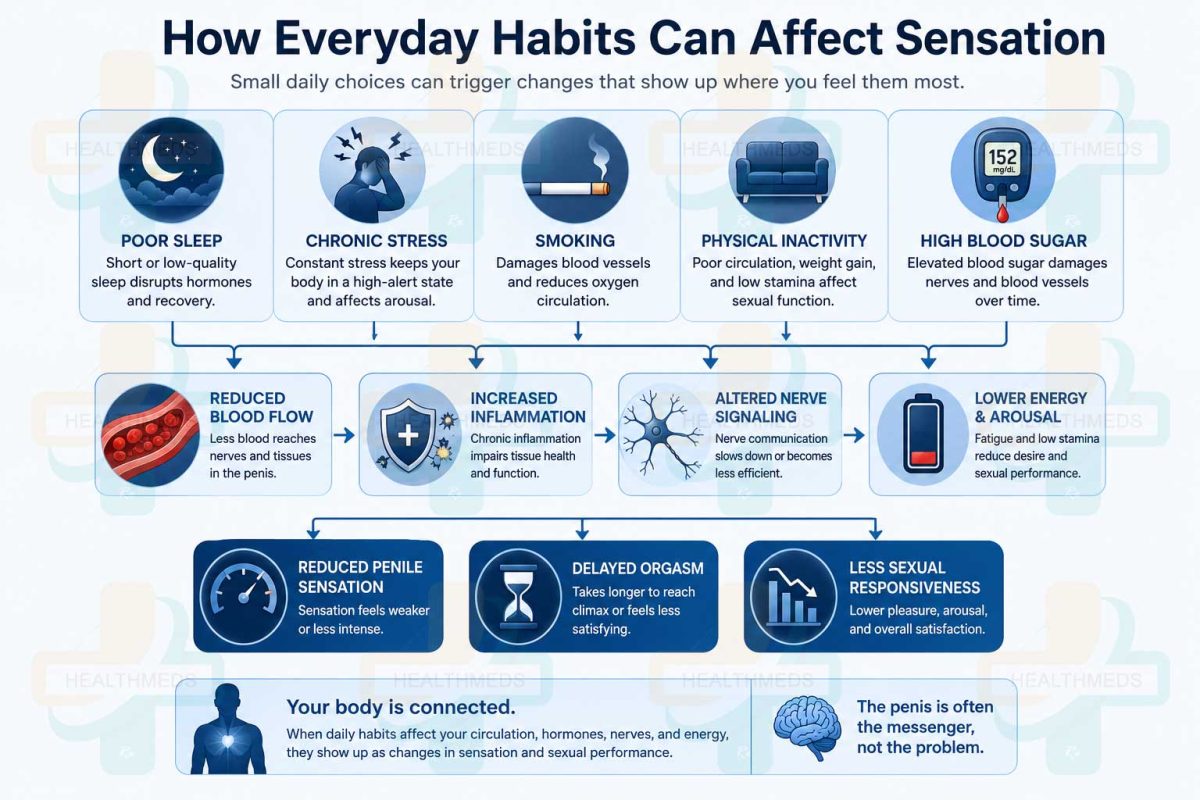
Habbits Affecting Penile Sensitivity
What Most Men Ask First And What They Should Ask Instead
In case of loss of penile sensation, the right question is not:
“Is something wrong with my penis?”
but rather:
“What has changed in my body, my lifestyle, or my health that could be affecting sensation?”
For some men, the changes are temporary and can be reversed. For others, it may be a warning that there is something to take a closer look at. It is necessary to focus on the pattern, duration, and accompanying symptoms, rather than a single event.
The loss of penile sensation happens naturally. Ignoring this loss may also be a common practice. The ability to distinguish between a temporary loss and a long-lasting one will help you act wisely.
Sometimes the body whispers before it shouts. A change in sensation may be one of those whispers.