
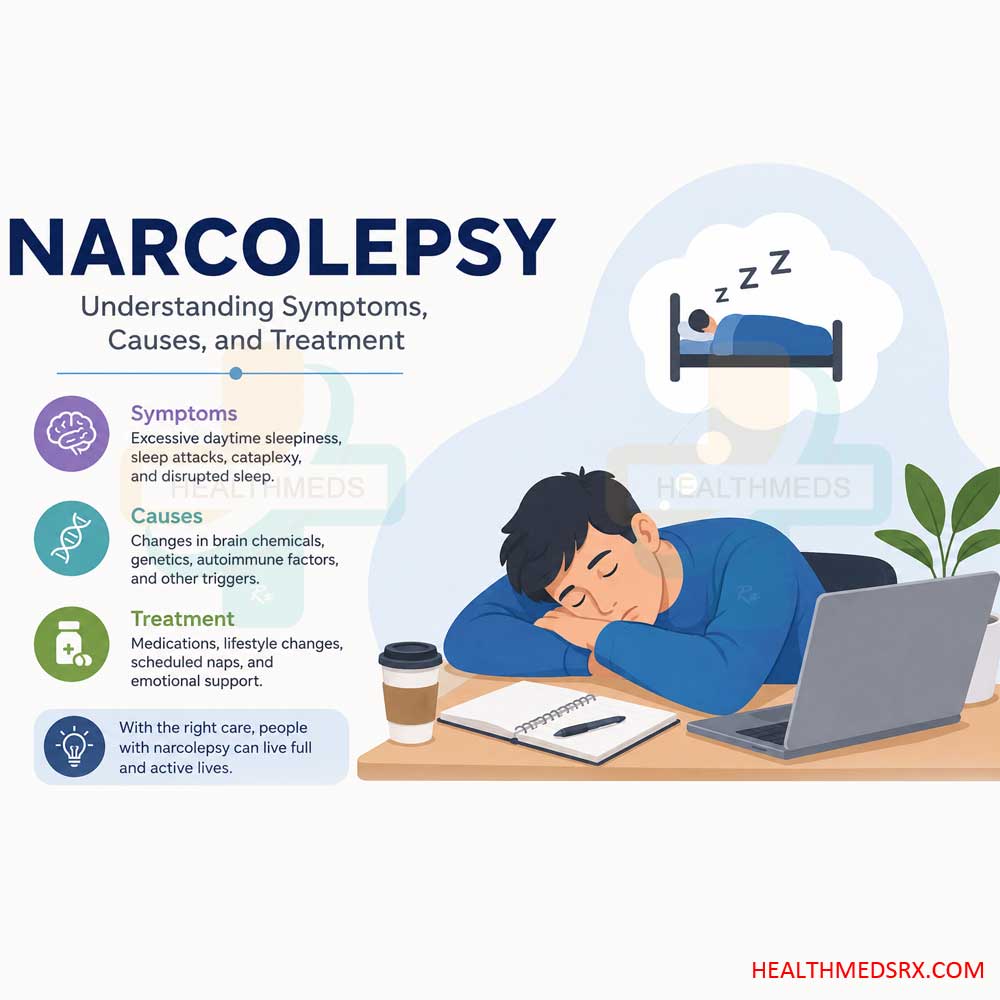

We all need a break now and then. Fatigue can occur at the end of a long day at work, after a stressful week or even after an all-nighter. People diagnosed with narcolepsy experience chronic sleepiness all day, every day, no matter how little sleep they get or when they sleep, or if they have a chance to sleep at all. Narcolepsy is more than just tiredness – it is considered a chronic neurological disorder that affects the way the brain normally regulates sleep and wakefulness.
Many people believe that someone with narcolepsy can fall asleep suddenly, which can create a lot of misunderstandings about the disorder and its impact on the person’s concentration, emotional and physical wellbeing, work-based performance, ability to interact and develop relationships with other people and enjoyment of everyday activities. All these everyday activities can be very hard, and sometimes even impossible, for people with narcolepsy.
Understanding narcolepsy, its characteristics, and the disorder as a whole can be tremendously beneficial not just for those individuals who have a diagnosis of the disorder, but also for immediate family, close friends, co-workers/employers and anyone providing supportive care and/or awareness to the individual.
What Exactly Is Narcolepsy?
Narcolepsy is a chronic disorder that disrupts the body’s natural balance between wakefulness and sleeping. The brain fails to adequately regulate the levels of alertness as well as REM (rapid eye movement) sleep, resulting in an abnormal pattern of daytime and night-time sleep.
People who have narcolepsy may experience extreme daytime drowsiness (excessive daytime sleepiness) and/or a sleep attack during the day (a sudden “nod off”). They can also have dream-like sensations while awake and experience some degree of disturbance in their ability to sleep at night (sleep disturbances). Additionally, some people with Narcolepsy will experience muscle weakness (called cataplexy) when they are experiencing emotional responses to strong stimuli.
Narcolepsy can develop in people during their teens or early 20s, but it can begin at any age.
Narcolepsy Is More Than Just Feeling Sleepy
It’s a big mistake to think that people with narcolepsy just sleep more. In fact, many people suffering from narcolepsy don’t necessarily feel the need to sleep too much during the day. Rather, they sleep poorly at night, and in the morning, they feel extremely drowsy.
Those who suffer from narcolepsy might fall asleep suddenly when:
- Talking to someone
- Eating meals
- Working on a computer
- Watching television
- Sitting in meetings
- Traveling
- Studying
The sleep episodes may occur suddenly, without warning, and make daily activities challenging.

Common Symptoms of Narcolepsy
The symptoms differ among patients, although several symptoms have been linked to the
Constant Daytime Sleepiness
The most common symptom is excessive daytime sleepiness, which is typically the first and most obvious symptom. People often report being wired and worn out even after all-night sleep.
Reading, going to school or sitting quietly can make a person feel extremely drowsy.
This unrelenting tiredness may impact:
- Productivity
- Learning ability
- Mood
- Memory
- Social confidence
For many years, many people suffer from symptoms, but do not realize that these symptoms could be connected to a sleeping disorder.
Sudden Sleep Attacks
Sleep attacks are temporary episodes of sleep. These episodes can last for a few seconds to many minutes.
Sleep attacks are not caused by fatigue, but are hard to avoid. For some people, it might be a sudden “shutting down” of the brain.
Cataplexy: Temporary Muscle Weakness
Cataplexy is a very distinctive symptom of narcolepsy. Sudden muscle weakness can be caused by strong feelings like laughing, getting excited, being surprised or being angry.
Symptoms may include:
- Drooping eyelids
- Slurred speech
- Weak knees
- Loss of facial expression
- Temporary collapse
The body is weak, but the person will be fully conscious.
Sleep Paralysis
Some of the people who suffer from Narcolepsy can sometimes also find themselves, for some time, unable to speak and/or move when waking up or falling asleep.
The episodes may be terrifying because the person is aware of what is happening and can’t get to them for a brief time.
Vivid Hallucinations
Hallucinations, like those found in dreams, can happen in the sleep transition. These experiences can be so realistic and emotional.
Some people say that they hear voices, see figures or feel movement in the room when they are partly awake.
Broken Nighttime Sleep
Interestingly, while many people with narcolepsy are sleepy during the day, they have trouble sleeping at night.
Night time sleep may include:
- Frequent waking
- Restlessness
- Intense dreaming
- Difficulty staying asleep
What Causes Narcolepsy?
The cause of narcolepsy is unclear, but some biological factors appear important for researching this syndrome.
Low Hypocretin Levels
Some patients with narcolepsy have low levels of hypocretin, a brain chemical that helps us stay awake and also controls any REM phase of sleep (i.e., usual dream time).
When the hypocretin-producing cells are damaged or altered in a manner that causes a breakdown in the sleep-wake cycle in the brain.
Autoimmune Activity
Some researchers believe that an abnormal immune system destroys healthy brain cells that usually produce hypocretin. This leads to the onset of narcolepsy.
Genetics
There might be a slight increased risk of narcolepsy in an individual with an affected family member; however, this is not always the case.
Stress or Infection
Symptoms associated with this disorder can occur with severe stress and/or infections (usually viral or bacterial) or hormonal changes.
How Narcolepsy Impacts Daily Life?
Narcolepsy does not solely affect the way we sleep; it may also affect mood or emotion, and can also create problems with relationships, school, or work.
Challenges at School
A student with narcolepsy may have difficulty staying awake during a lecture or studying. Some teachers may misinterpret narcoleptic symptoms as laziness or lack of motivation and/or lack of discipline.
Memory loss and difficulty in concentration can also be experienced, which can impact academic work.
Workplace Difficulties
Narcolepsy can lead to problems maintaining alertness and productivity at work meetings, job sessions or lengthy shifts with adults.
Working jobs that involve driving, operating machines or working at night can be especially hazardous.
Others may not be aware of the condition, but many fear being judged unfairly at work.
Emotional Health Struggles
Suffering from exhaustion regularly can be very emotionally challenging. The following symptoms are common to many people with narcolepsy:
- Anxiety
- Depression
- Social isolation
- Frustration
- Embarrassment
When others don’t understand you, it can create an emotional burden.
Impact on Relationships
Relationships can also suffer when the person diagnosed with the condition has not been diagnosed by a partner, friend, or family member.
Regularly tired and changed schedules can restrict social interaction and emotional bonding.
Diagnosing Narcolepsy
When symptoms are either ignored or blamed on stress, depression, insomnia or other sleep disorders, narcolepsy may be delayed in diagnosis for several years.
Several tests can be used to confirm a diagnosis.
Sleep Study
A sleep test is an overnight test that tracks breathing, brain activity, heart rate and sleep patterns.
Multiple Sleep Latency Test
This test is used to determine the person’s sleep onset in the daytime during scheduled naps.
Medical Evaluation
Symptoms, medical history, emotional issues, medications and sleep are all carefully considered.
Several treatment options available for Narcolepsy.
There is no “cure” for narcolepsy, but treatment can help enhance quality of life.
Wakefulness Medications
There are several drugs available to help increase daytime alertness and concentration.
The following treatment is usually prescribed:
Some of these treatments can help alleviate daytime sleepiness and help with mental concentration.
Managing Cataplexy and Sleep Symptoms
There are certain antidepressant medications and other drugs that can help reduce the symptoms of cataplexy, hallucinations and sleep paralysis.
Lifestyle Changes Matter Too
Treatment is most effective when used along with healthy lifestyle choices.
Helpful strategies include:
- Maintaining consistent sleep schedules
- Taking short planned naps
- Exercise regularly
- Avoiding alcohol and smoking
- Managing stress
- Eating balanced meals
There may be some minor changes that can enhance energy and symptom control.
Building a Support System
Emotional support is one of the most crucial aspects of handling narcolepsy. Addressing issues openly with family, employer, teacher and close friends may help minimize misunderstanding and stigma.
People may also find support groups and counselling helpful in dealing with the emotional issues related to living with chronic fatigue and change in their usual daily activities.
Looking Toward the Future
Driven by further research, knowledge of narcolepsy is advancing. Researchers are looking for new treatments or new therapies with chemicals for the brain that could help better control symptoms in the long-term, and new advances in sleep medicine.
Living with narcolepsy is not easy, but with the right treatment and lifestyle support, many people can build a career, sustain relationships and lead a fulfilling life with the condition.
People with narcolepsy can learn to control their symptoms and enhance their quality of life with increased awareness, early diagnosis, healthy habits, and ongoing support.