

Heart Surgery- What is it ? When is it needed? Is this procedure suggested to every one? Well, The World Health Organization reported that heart diseases continue to be one of the major reasons for deaths and disease in the world, causing millions of deaths each year. Even though some heart diseases can be managed through lifestyle changes as well as medications, in some cases, it may be required to undergo heart surgery to get the normal heart function and the normal quality of life back, and to avoid dangerous complications. Thanks to the technological progress in medicine, heart surgery techniques have been improving as well, making the surgeries safer and more successful than before.
Patients and their family members need to know about the different types of heart surgery, their definitions, and the potential benefits and risks. In this article, you are going to learn about common types of heart surgeries, what to expect before the surgery, during it and after the surgical procedure.
When Is Heart Surgery Necessary?
Heart surgery is usually recommended when other treatments, such as medications, dietary changes, exercise, or minimally invasive surgery, have not been successful in treating heart disease.
A cardiologist or cardiac surgeon may recommend surgery for conditions such as:
- Serious coronary artery disease.
- Heart valve disorders
- Congenital heart defects
- Heart failure
- Aortic aneurysms
- Abnormal heart rhythms
- Muscles that have been injured by a heart attack.
 The type of surgery will be determined by the patient’s age, health, medical history and severity of the condition.
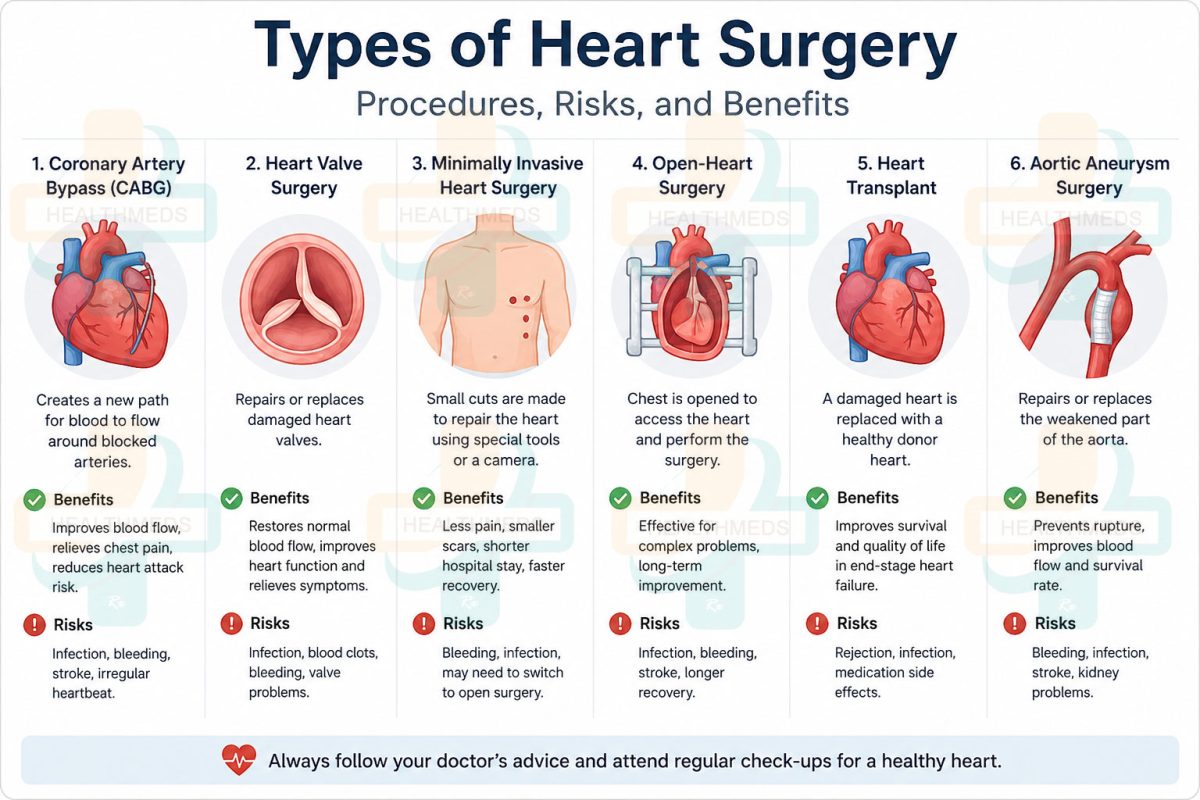
1. Coronary Artery Bypass Grafting (CABG)
Coronary artery bypass surgery is one of the most popular heart surgeries. It is performed to treat serious situations of coronary artery disease when fat deposits block or restrict arteries, which provide blood to the heart.
While the procedure is in progress, the surgeon takes a healthy blood vessel from the chest, leg or arm and uses it to form a new blood route around the blocked blood vessel, so that blood can get to the heart muscle more easily.
Benefits
- Enhances the circulation to the heart.
- Helps relieve any chest pain (angina)
- Reduces the chances of a heart attack.
- Improves physical activity and endurance
- Provides prolonged survival in many patients
Risks
CABG is very effective but may have the following risks:
- Infection
- Bleeding
- Blood clots
- Stroke
- Irregular heartbeat
- Kidney complications
- Temporary memory or cognitive changes
With the proper rehabilitation and lifestyle changes, the majority of patients make a good recovery.
2. Heart Valve Surgery
Heart valves control the movement of blood in the heart. When a valve becomes narrowed (stenosis) or leaks (regurgitation), surgery might be required.
Treatment will involve repair of the existing valve or replacement with a mechanical or biological valve, depending on the condition.
Common valves that need surgery are:
- Aortic valve
- Mitral valve
- Tricuspid valve
- Pulmonary valve
Benefits
- Promotes good blood flow
- Helps reduce breathlessness. Relieves shortness of breath.
- Improves heart efficiency
- Reduces fatigue
- Helps to slow the progression of heart failure
Risks
Potential complications include:
- Infection
- Blood clots
- Valve failure
- Bleeding
- Need for future valve replacement
Patients need to take anti-coagulation drugs for the rest of their lives if they have mechanical valves.
3. Minimally Invasive Heart Surgery
Some heart procedures don’t involve all the way opening the chest. Minimally invasive heart surgery makes use of small incisions between the ribs and specialized tools, possibly with the aid of cameras or robotic machinery.
This method could be appropriate for:
- Valve repair
- Valve replacement
- Certain congenital heart defects
- Some bypass procedures
Benefits
- Smaller scars
- Less pain
- Reduced blood loss
- Shorter hospital stay
- Faster recovery
- Lower infection risk
Risks
It is considered safe but can lead to bleeding, infection, and may require open-heart surgery if needed.
4. Open-Heart Surgery
Open heart surgery is surgery that is performed when a procedure is done through an opening in the breastbone to reach the heart. In many surgeries, a heart-lung bypass machine temporarily replaces the pumping action of the heart.
Open-heart surgery is frequently done for:
- Coronary artery bypass
- Valve replacement
- Congenital heart defect repair
- Aortic surgery
- Heart transplantation
Benefits
- Makes surgery possible if you have a complex heart condition
- Very good long-term results
- Extensive heart repair of several heart issues
Risks
Open-heart surgery carries risks such as:
- Infection
- Bleeding
- Stroke
- Blood clots
- Lung complications
- Longer recovery time
However, modern surgical techniques have made the outcomes of surgery better, even with these risks.
5. Heart Transplant Surgery
Heart transplant is offered only to patients who have severe heart failure and have not responded to any other treatment.
The heart is taken out and replaced with a healthy heart from the donor.
Benefits
- Significantly improves survival
- Restores heart function
- Improves the quality of life
- Increases mobility and energy.
Risks
Patients need to be on lifelong medication to avoid organ rejection.
Other risks include:
- Infection
- Organ rejection
- Kidney disease due to drugs.
- Risk of cancer due to immune suppression.
Follow-up is important following a transplant.
6. Aortic Aneurysm Surgery
An aortic aneurysm is when a portion of the aorta becomes weak and bulges, making it more likely to burst.
Surgeons repair the damaged area with synthetic grafts or with a minimally invasive stent graft, depending on where and how large the area is.
Benefits
- Prevents life-threatening rupture
- Can help restore blood flow back to normal.
- Improves long-term survival
Risks
Bleeding, Infection, stroke, and Kidney injury are possible complications.
7. Congenital Heart Defect Surgery
A structural defect of the heart may be present at birth that causes abnormal blood flow.
Examples include:
- Atrial septal defect
- Ventricular septal defect
- Tetralogy of Fallot
- Patent ductus arteriosus
These defects in the heart can be corrected through surgery to facilitate proper heart function and to avoid future complications.
Benefits
- Normalizes blood circulation
- Promotes children’s well-being
- Helps to prevent future damage to the heart.
- Improves life expectancy
Preparing for Heart Surgery
Preparation enhances surgical results and healing.
Patients may undergo:
- Blood tests
- Electrocardiogram (ECG)
- Chest X-rays
- Echocardiogram
- Coronary angiography
- Medication review
- Lifestyle counseling
Before surgery, doctors may advise quitting smoking, managing the diabetes, maintaining healthy blood pressure and eating a healthy diet.
Recovery After Heart Surgery
The recovery time varies depending upon the procedure as well as the person’s health.
Patients’ improvement is usually slow over a period of many weeks or months.
Recovery typically includes:
- Pain management
- Wound care
- Breathing exercises
- Walking and gentle physical activity
- Cardiac rehabilitation
- Healthy eating
- Stress management
- Follow-up appointments
Patients should tell doctors if they have any fever, extreme chest pain, redness in the wound, unusual swelling or difficulty breathing.g
Lifestyle Changes That Support Recovery
Structural heart issues may be treated with surgery, while a healthy heart is heavily reliant on daily routines.
Eating a healthy diet is important, and some guidelines are:
- Following a heart-healthy diet with plenty of vegetables, fruits, whole grains and lean proteins.
- Reducing saturated fat, salt and added sugar
- Getting regular exercise under medical supervision
- Body weight is a key factor in preserving health.
- Avoiding tobacco products
- Limiting alcohol intake
- Learning to manage stress with relaxation techniques
- Following the prescribed medication regimen regularly
Others who have had heart disease might also have other health issues like diabetes, obesity or high cholesterol, which will need continuing treatment. Prescribed medications must always be taken as directed by health care professionals in addition to adhering to a healthy lifestyle.
Potential Complications After Heart Surgery
While most surgeries are successful, there is the possibility of complications that will arise in a few instances.
These may include:
- Infection
- Irregular heartbeat (arrhythmias)
- Blood clots
- Heart attack
- Stroke
- Kidney problems
- Lung infections
- Bleeding
- Delayed wound healing
The early diagnosis and timely treatment markedly limit the complications.
The Importance of Cardiac Rehabilitation
Cardiac rehabilitation is a supervised exercise programme to help patients safely become strong again following heart surgery.
It typically includes:
- Personalized exercise plans
- Nutrition education
- Blood pressure monitoring
- Emotional support
- Stress management
- Heart health education
Cardiac rehab has been proven in numerous studies to help with recovery, decrease hospital re-admission and decrease the risk of future cardiac problems.
Over the years, heart surgery has revolutionized therapy for a myriad of serious heart diseases and has become a beacon of hope for those affected by blocked blood vessels, malfunctioning heart valves, birth defects, heart failure and more. Coronary artery bypass grafting, valve repair/replacement, minimally invasive surgery, open-heart surgery, heart transplant and aortic aneurysm repair can greatly enhance heart function, alleviate symptoms and prolong life expectancy.
While each form of surgery has a certain amount of risk involved, today’s surgical technique, advanced medical technology and in-depth post-operative care make heart surgery safer and more effective than ever before. With medical guidance, cardiac rehab, adopting a heart-healthy lifestyle and scheduled check-ups, patients can have improved cardiovascular health and a higher standard of living for many years after cardiac surgery.