
A serious medical condition called deep vein thrombosis (DVT) occurs when blood clots form in deep veins that are typically located in the legs.
While many clots do not move from their original site to another part of the body, some do break off and travel to the lungs, resulting in pulmonary embolism (PE), a potentially life-threatening condition.
The ability to recognize signs and risk factors associated with DVT and to be aware of treatment options may assist individuals in getting medical attention quickly and minimize complications caused by DVT.
What Is Deep-Vein Thrombosis (DVT)?
DVT occurs when blood coagulates/thickens and forms a clot within the deep vein system of the leg (usually in the calf, thigh, and/or pelvic areas).
Typically, blood flows freely through the veins back to the heart. However, if blood flow has slowed down, there has been trauma to the inner lining of the vein, or there is a predisposing medical condition or medication that will cause blood to have an increased tendency to form a clot, then a thrombus will develop.
DVT occurs more frequently than most people understand; prolonged periods of immobility due to inactivity, recent surgery, certain health conditions, and specific medications can increase the potential for developing a thrombus.
 Common Signs and Symptoms
DVT can sometimes be asymptomatic, as some individuals do not have any or minimal apparent signs/symptoms associated with their DVT; however, when signs/symptoms are present, they typically are present in one leg.
Common symptoms include:
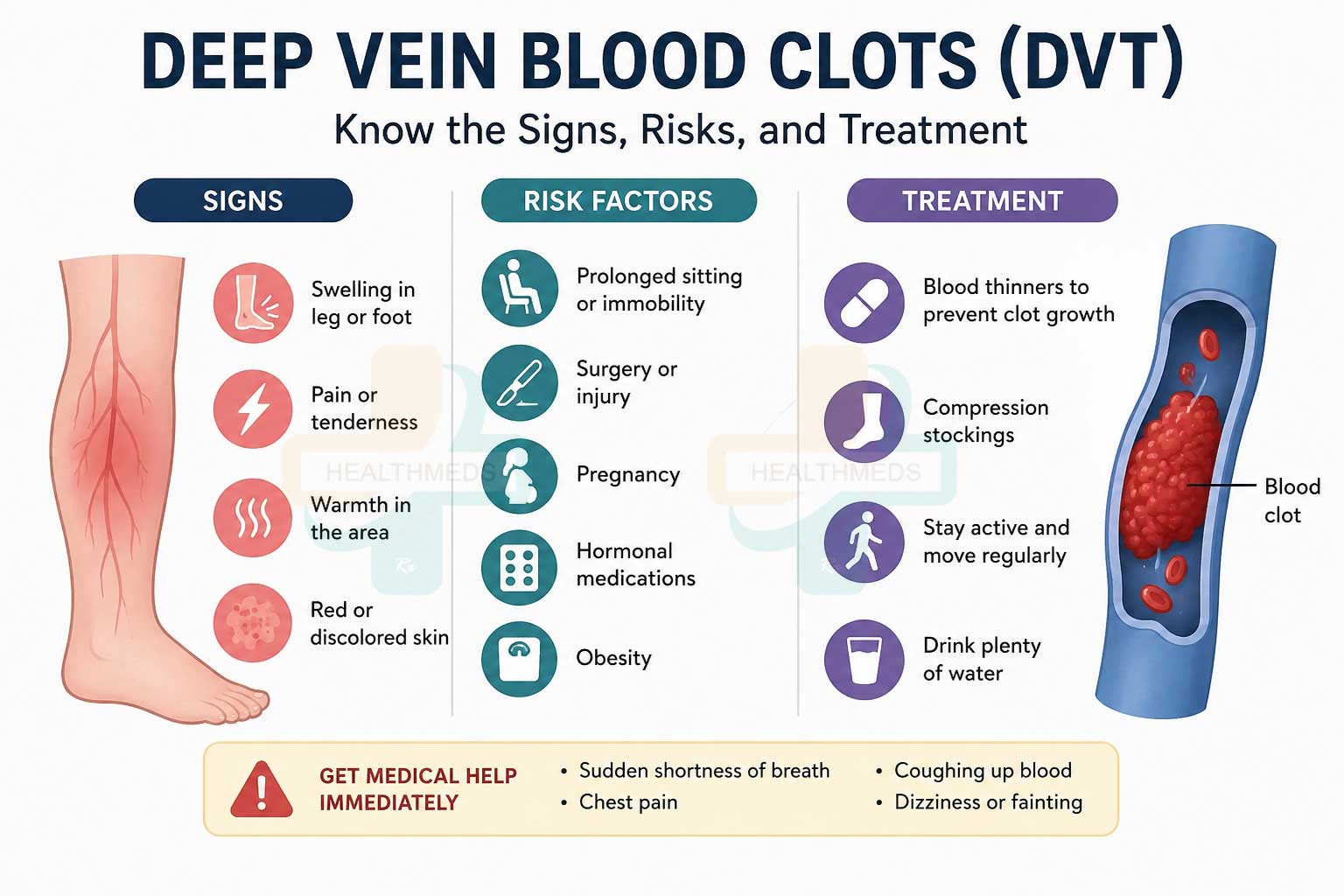
- Unusual swelling of any of your legs, ankles, or feet.
- Experiencing pain/discomfort in your calves that may be accompanied by tenderness.
- The skin over the area where you’re experiencing symptoms may feel warmer than the surrounding areas.
- Skin discolouration and/or redness may be present over the area experiencing symptoms.
- Cramping in your calves that worsens whenever you walk or stand can occur.
Some people describe the symptoms of DVT as being similar to those of pulling muscles or having a charley horse cramp. Because these same symptoms can be caused by many different health conditions, if you begin experiencing any of these symptoms rapidly and/or without any identifiable cause, you must obtain immediate medical evaluation.
Get emergency care immediately.
Emergency
If you develop any of the following symptoms, be sure to call for emergency assistance or get to a local emergency room:
- Shortness of breath that comes on suddenly.
- Chest pain that worsens with deep breathing.
- A rapid, pounding heartbeat.
- Feeling lightheaded or possibly even fainting.
- Coughing up blood.
Any of the above-mentioned symptoms may indicate that you are experiencing a pulmonary embolism and will require immediate treatment.
Who Is at Risk?
Many factors increase the risk for DVT when an individual has multiple risk factors at one time:
Major risk factors
- Prolonged immobility– Sitting for a long time, prolonged flights, or bed rest can decrease blood flow to the legs.
- Recent surgery or hospitalization– Especially procedures involving the hips, knees, or abdomen.
- Cancer and cancer treatment– Certain cancers tend to make the blood clump.
- Pregnancy and the postpartum period – High risk, hormonal changes and pressure on the pelvic veins.
- Hormonal medications– Birth control pills and hormone replacement therapy increase the risk of clots.
- Obesity– The extra weight puts stress on veins.
- Smoking– Tobacco can harm blood vessels and lead to clots.
- Family history– Inherited clotting disorders can put a person at higher risk for DVT.
- Older age– Risk substantially increases with age.
How Doctors Diagnose DVT?
If the doctor suspects DVT, he or she will examine the symptoms, medical history, and risk factors. A venous ultrasound is the most common diagnostic test used, which is a sound wave test looking for clots in the leg veins.
Additional tests may include:
- D-dimer blood– test helps identify abnormal clot formation.
- CT or MRI scan– if there is involvement of the pelvic veins.
- Venography– This is one of the imaging tests that is not performed as frequently today.
Prompt diagnosis is vital as this will keep the clot from growing in size and/or spreading to the lungs.
Treatment Options
Treatment is aimed at preventing the clot from growing and the development of pulmonary embolism.
1. Blood Thinners (Anticoagulants)
These are the mainstays of treatment for DVT. They do not dissolve the current clot right away, but they inhibit the formation of new clots, and the body will slowly dissolve the clot over time.
Common anticoagulants include:
- Apixaban
- Rivaroxaban
- Warfarin
- Heparin
The period of treatment is from a few months to indefinite, depending on what causes the clot.
2. Thrombolytics (Clot-dissolving Medications)
If the clot is large or is causing a life-threatening pulmonary embolism, thrombolytic therapy (clot-busting medication) may be used. Thrombolytics have a much higher risk of bleeding than anticoagulants and are typically used only for large clots or life-threatening pulmonary embolisms.
3. Compression Stockings
Compression stockings (graduated) reduce swelling and discomfort by helping to increase blood flow in the legs. They may also reduce a person’s risk of developing post-thrombotic syndrome, which causes chronic pain and swelling in people who have had a deep vein clot.
4. Inferior Vena Cava (IVC) Filter
If a patient cannot take anticoagulants due to bleeding risks, an IVC filter may be placed in the large vein leading to the heart (IVC). This filter will catch clots before they reach the lungs.
Preventing Deep-Vein Blood Clots
Several simple lifestyle choices may help prevent the development of DVT.
Prevention tips
- When on long trips, you should be moving regularly. You need to stand up, stretch and walk every 1 or 2 hours.
- Make sure you stay hydrated when you travel.
- You should also exercise regularly to improve circulation.
- You should maintain a healthy weight..
- You should avoid smoking.
- After surgery, you should follow your doctor’s advice and take all prescribed medications, such as blood thinners or compression devices (if needed).
- If you have a history of clotting problems (DVT), you should discuss hormone replacement therapy with your doctor before starting.
Living After a DVT
Recovery from DVT usually requires ongoing monitoring and some lifestyle changes. Most people can resume normal daily activities. However, make sure you follow the medication regimen that your doctor prescribed and attend your scheduled follow-up appointments.
Some individuals will develop post-thrombotic syndrome, which can give them chronic swelling, heaviness, changes in skin color and pain in the affected limb. Early treatment of DVT, moving regularly, and the use of compression therapy will reduce the likelihood of developing post-thrombotic syndrome.
When to Call Your Doctor
 Contact a healthcare provider if you experience:
- New or worsening leg swelling
- Persistent calf pain
- Unexplained redness or warmth in one leg
- Bleeding while taking blood thinners
- Any symptoms of pulmonary embolism
You may be at risk for deep vein thrombosis (DVT), regardless of how common or dangerous it is by itself. It’s important to be aware of the early warning signs of a clot (like swelling, pain, heat and discolouration) in one leg; if you treat the underlying cause quickly, you can prevent developing a clot.
Prolonged immobility, surgery, some types of cancer, pregnancy, smoking and certain medications are all risk factors for developing a DVT. However, treatments such as anticoagulation or blood thinner medications, compression therapy, and in some cases, the use of advanced clot removal techniques can significantly decrease any complications from having a DVT.
If you think you may have a DVT, it is very important to see a doctor as soon as possible. Early treatment can avoid serious consequences, improve your chances of continuing to have vascular health and could save a limb or your life!