
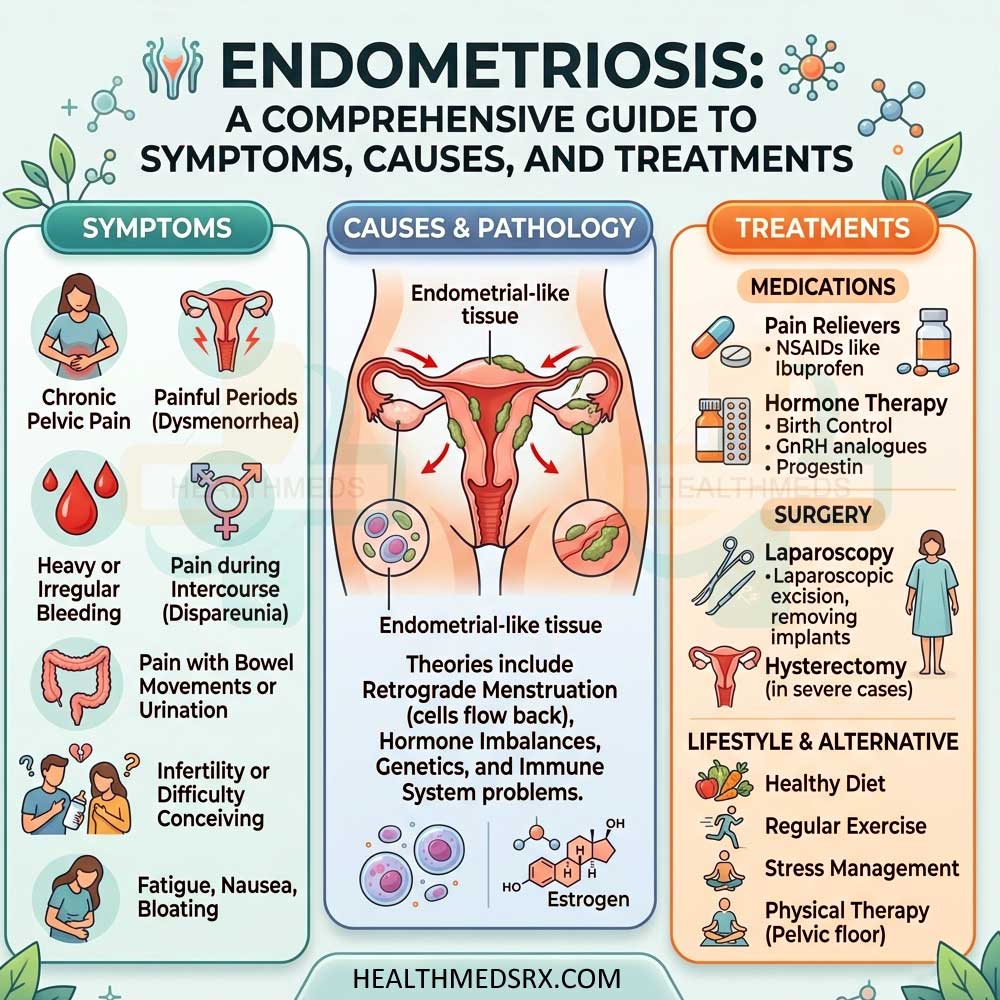

Endometriosis is a widespread but misconceived ailment of millions of women around the globe. Whereas it is normal, not all women know about the symptoms and complications of this condition. The disease can lead to very intense pain, infertility, and disruption of normal life. The awareness of endometriosis should be developed in a way that allows individuals to learn how to detect the signs of this illness early enough and get the appropriate medical care.
What Is Endometriosis?
Endometriosis is an ailment in which the same kind of tissue of the inner wall of the uterus (endometrium) grows beyond the uterus. Such growths can be observed in body organs such as the ovaries, fallopian tubes, the uterus’s outer layer and even the pelvic lining.
This tissue is similar to normal uterine lining and becomes thickened, disintegrates and bleeds during menstruation. However, through a lack of an out-of-the-body exit, this is lodged in the body. This can bring about inflammation, scar tissue and adhesions (bands of fibrous tissue which hold organs) together.
Endometriosis is a condition that is commonly diagnosed in women who have attained their reproductive age in life, though the symptoms are manifested at a very young age, as early as 25-40 years of age.
Endometriosis Symptoms.
Endometriosis could have different symptoms. The pain is acute in some women and none or mild in others.
Painful Periods
Severe menstrual cramps or dysmenorrhea are one of the most well-known symptoms. The pain experienced in endometriosis, unlike that in normal cramps, can gradually build up over time, and it can spread to the lower back or legs.
Chronic Pelvic Pain
A red flag would be that even when one is not in the middle of the menstrual cycle, there is ongoing pelvic pain. This may be sharp, dull, throbbing and may interfere with life.
Pain During Intercourse
Painful sexual intercourse is another symptom many women experience. This pain may occur during or after sexual intercourse and is normally accompanied by inflammation in the pelvis.
Infertility
Fertility problems are also related to endometriosis. It has been found that about 30-50 % of women with endometriosis may experience difficulties during conception. Scar tissue and inflammation may damage the reproductive organs.
Other Symptoms
The fatigue, intestinal constipation/bloating, and heavy menstrual bleeding are also possible in women. Many women are not able to be diagnosed for years because of the overlap of those symptoms with other disorders.
Causes and Risk Factors of Endometriosis.
The exact cause of endometriosis has yet to be known by researchers, but there are some theories that have been put forward.
Retrograde Menstruation
This has been partly explained by the generally accepted opinion of retrograde menstruation, where menstrual fluid is leaked back into the fallopian tubes as opposed to the body.
Genetic Factors
Family history can induce endometriosis. There is also a genetic factor associated with it, and it is believed that women who have close relatives with the disease have greater chances of contracting the disease themselves.
Immune System Disorders
The immune system is unable to detect and kill growing endometrial-like tissue growing outside the uterus.
Hormonal Influence
Hormones, particularly estrogen, are suspected to have a major role in stimulating the growth of the endometrial tissue outside the uterus.
Diagnosis of Endometriosis.
The signs and symptoms of endometriosis can be confused with those of other conditions, such as irritable bowel syndrome or pelvic inflammatory disease, making the diagnosis of the condition very challenging.
Doctors will normally begin with an extensive medical history and physical symptom examination. This means discussing menstrual periods, intensity of pain and reproductive problems.
Ultrasound Imaging
Typically, the endometriosis cysts are diagnosed through a pelvic ultrasound. It may not be capable of identifying all forms of the condition; however, it can be helpful.
Laparoscopy
The most accurate method of diagnosing endometriosis is laparoscopy, which is a minimally invasive surgical procedure. During the procedure, a surgeon inserts a small camera into the abdomen to examine the organs of the pelvis and identify endometrial implants.
Medical History Assessment
Explicit analysis of symptoms and health history of a patient is also a significant aspect to consider during diagnosis. The results of clinical findings are typically combined with the results of the imaging to generate a final diagnosis.
Treatment Options.
Endometriosis is not a disease that can be constantly cured, but it is possible to manage the symptoms with the help of numerous treatment methods to provide a high quality of life.
Pain Management Strategies
Doctors normally prescribe anti-inflammatory drugs such as Ibuprofen to reduce the amount of inflammation and ease the pain caused during menstruation.
Hormone Therapy
Hormone therapy normally prevents or regulates the menstrual cycle. The procedure reduces the growth in the endometrial tissue and activity. They can be dealt with through hormonal birth control, injections and some medications.
Surgical Treatment
In moderate cases to severe cases, surgery may be recommended to remove the endometrial implants, cysts and scar tissue. One of the most popular ones is laparoscopic surgery, which does not necessitate the removal of reproductive organs to get rid of the abnormal tissue.
Fertility Treatments
IVF will be able to increase the success rates of pregnancy among women who have infertility associated with endometriosis. The treatment is dependent primarily on the level of severity of symptoms, age and childbearing desires.
Modifications that can help in lifestyle.
Even though drugs are necessary, there are lifestyle modifications that can improve the symptoms.
Regular exercise can help to improve the flow of blood and reduce inflammation. An appropriate balance of hormones can also be achieved through a balanced diet that is high in fruits, vegetables and whole grains.
One of the stress management techniques that may enhance the general well-being and perceived pain is yoga, meditation, and deep breathing. Other women are relieved with caffeine, decreased intake of processed foods and more intake of omega-3 fatty acids in the diet.
Furthermore, connection with other endometriosis patients can be a complementary healing event and one that provides coping skills. Women could overcome the burdens of the condition with support groups and counselling services.
Endometriosis Complications.
When not treated, endometriosis can cause various complications. Chronic pelvic pain may have a tremendous impact on day-to-day life, relationships, and psychological health. Adhesions and scar tissue can make organs in the pelvic area adhere to each other, resulting in additional pain and issues.
Another serious issue is infertility, and that is why this diagnosis and treatment are very important. Raising awareness levels regarding endometriosis helps women to become aware of symptoms and to seek medical advice. Through further research and improved medical care, most women with endometriosis will be able to manage the disease and lead a healthy and active life.