
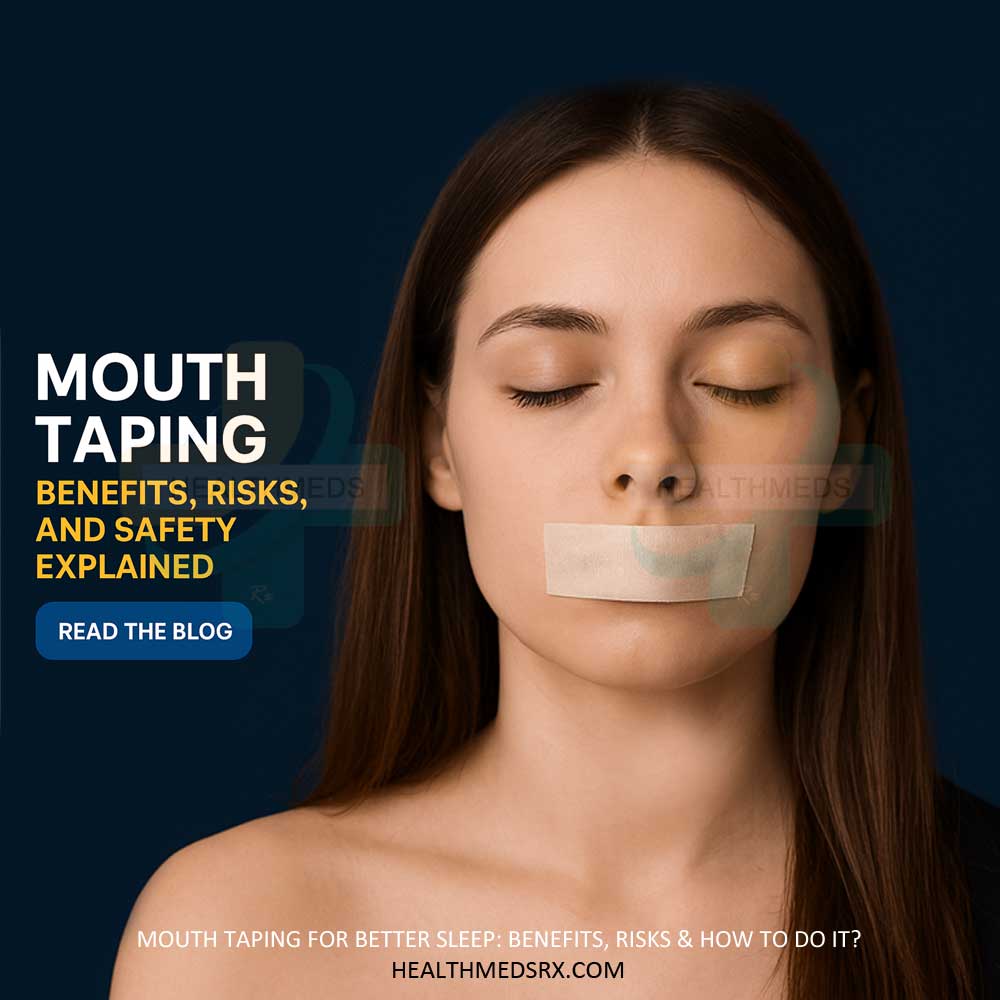

Mouth taping has been a popular social media conversation over the last year. The videos and posts state that placing a piece of tape over the lips while sleeping can improve sleep quality, reduce snoring, and encourage the person to breathe through their nose. This easy, inexpensive trend has attracted the enormous attention of wellness enthusiasts and people looking for natural sleep solutions.
Nevertheless, like most viral health trends, mouth taping has its important questions: Is mouth taping really a helpful treatment? Is it safe? And is there medical science that we can point towards supporting the allegations being passed along?
In this article, I will discuss what mouth taping is, how it enhances performance, its possible benefits, risks, scientific evidence and answers to few common questions that people get when they visit Google.
What Is Mouth Taping?
Mouth taping entails applying a small strip of adhesive tape over the lips before going to sleep. The purpose of the practice is to slightly keep the mouth closed so that it encourages breathing through the nose during the night.
It is based on the notion that nasal breathing is healthier than mouth breathing. Air is automatically filtered, humidified and warmed by the nose and then passes down to the lungs. It also synthesizes nitric oxide which is a molecule that aids in the supply of oxygen within the body.
Whereas there is an understanding that nasal breathing can be vital, deliberately tightening the mouth with tape is not always accepted as well as advisable by all healthcare experts.
Why do people tape their mouths up at night?
According to the proponents of mouth taping, it has several health and lifestyle advantages that include:
- Less snoring: Mouth closure can result in constrained throat vibrations, which cause less snoring.
- Better sleep quality: There are people who say that they feel refreshed and more active after getting up.
- Dry mouth relief: Nasal breathing will decrease the dryness of the mouth and avert morning breath.
- Oral health protection: Having a moist oral environment can reduce the chances of gum disease and cavities.
- Improved breathing capacity: Nasal breathing enables slower and deeper breathing which some consider to be better at bringing in more oxygen.
These are potential benefits that make the practice so widespread in wellness circles on social media. It is important to distinguish of course, between anecdotal assertions and scientific results.
The Question is: Does Mouth Taping Work? What Science Says
The scientific evidence about the use of mouth taping is scarce and a few studies give some information:
- Pilot study on mild obstructive sleep apnea (2022): A small clinical trial stated that mouth-taping improved the frequency of snoring and the Apnea-Hypopnea Index (AHI) in patients with mild sleep apnea.
- Systematic review (2025): The review of 10 published studies revealed that only two studies have shown statistically significant benefits whereas most of them have shown mixed or inconclusive results. Scientists came to the conclusion that they hardly have enough evidence to endorse the use of mouth taping as an effective medical intervention.
- Scoping reviews of social media assertions: Numerous claims popular on social media include better facial structure, skin health or detox benefits, most of which lack scientific evidence.
Summary: There is evidence that mouth taping can benefit some people especially those who are mouth-breathers and snore mildly, although it is not a universal and proven solution.
Mouth Taping: The Impression of Benefits to Your Health?
Even though further studies remain necessary, the potential benefits of the practice of mouth taping are usually as follows:
- Snoring, Mouth Taping: Snoring is a common occurrence, whereby the air in the mouth and throat vibrates. Mouth taping can also decrease snoring among certain people by encouraging them to breathe through the nose.
- Taping the Mouth to relieve Dry Mouth: Individuals who get up with dry mouth or bad breath can have an advantage of being exposed to less dry air. Nasal breathing assists in preserving natural saliva flow, safeguarding the tissues of the mouth.
- Taping of the Mouth to Improve Sleep: Few experience deeper sleep that is not interrupted by a mouth tape. This is mostly anecdotal, though the effect can be correlated with a decrease in snoring or a better oxygen flow.
- Mouth Taping and Oral Health: Saliva is very important in the protection of teeth and gums. Taping of the mouth can be used to minimize gum irritation and cavities by avoiding moisture loss.
- Breathing Efficiency and Mouth Taping: Nasal breathing promotes superior oxygen supply and nitric oxide synthesis, which can be advantageous to general health.
Mouth Taping Risks: Is it safe for everyone?
Although on social media, mouth taping has been a trend of wellness experimentation, not everyone can afford it. Indeed, certain groups of people are prohibited from doing it altogether since the dangers surpass all possible advantages.
The following is an in-depth overview of why everyone should not attempt to tape his or her mouth in any situation:
 Individuals who have Obstructive Sleep Apnea (OSA)
 Individuals who have Obstructive Sleep Apnea (OSA)
- Why it is unsafe: Sleep apnea already results in interruptions in breathing when one is asleep. Mouth taping may also limit airflow and exacerbate the situation, exposing any person to low oxygen levels, abnormal heart rates, and even heart problems.
- Red flag symptoms of OSA: Snoring loudly, drowsiness during the day, choking or gasping when sleeping.
- Conclusion: Mouth taping is risky, in case you have or feel like you have sleep apnea. Treatment should be directed by a sleep specialist and is usually through CPAP therapy or an oral device.
Patients with Nasal Congestion or Nasal Obstruction
- The reason it is unsafe: Individuals with allergies, a deviated septum, prolonged sinusitis, or a cold are not able to breathe freely via the nose. Obstructing the mouth might lead to feelings of suffocation or lack of oxygen.
- Bottom line: When you cannot always breathe freely using your nose, then it should not be taped to your mouth.
Individuals who have Asthma or Chronic Respiratory Conditions
- Why it is unsafe: A sudden difficulty in breathing may occur due to such conditions as asthma, COPD (chronic obstructive pulmonary disease), or bronchitis. When the mouth is taped and the episode happens, this may result in a medical emergency.
- Bottom line: Mouth taping should never be attempted in people who have a long-term lung condition.
Children and Teenagers
- Why it is unsafe: Kids have smaller airways, a higher oxygen requirement and are more likely to have their airways blocked during sleep. Actually, the pediatricians cautiously recommend against children having their mouths taped.
- Bottom line: This is not something that should be tried with kids or teens.
Pregnant Women
- Why it’s unsafe: Pregnancy increases oxygen needs and it can occasionally augment nasal lumping in view of alterations in hormones. The limitation of airflow may be a dangerous idea for the baby and the mother.
- Conclusion: This is something that pregnant women should never do.
Individuals having Anxiety, Panic Disorders or Claustrophobia
- Why it is dangerous: Sleeping with a taped mouth can cause the feeling of suffocation, which results in panic attacks at night or disturbed sleep.
- Bottom line: In case you have a problem with anxiety or panic, this practice would rather harm you than help you.
People who are Skin Sensitive or allergic to Adhesive
- The reason it is unsafe: Medical-grade tape also may cause irritations, rashes or allergic reactions around the lips. In extreme situations, it may result in blistering or dermatitis.
- Conclusion: Mouth taping should be avoided in case of sensitive skin or adhesive allergy.
Individuals who Drink or Smoke before Sleep
- Why it is unsafe: Alcohol and sedatives cause the muscles of the throat to relax, which will further raise the possibility of airway blockage. Taping of the mouth in this case may increase the limitations of breathing.
- Bottom line: Mouth taping is not a safe option in case you are a consistent drinker or sleep medication user.
How to Tape Your Mouth Safely?
To those who want to experiment, the first step in the list must be safety. Experts recommend:
- Apply medical-grade sleep tape, which is intended. Avoid homemade tapes such as duct and packing tapes in the house.
- Start small: Use a vertical line across the lips, leaving a gap on the sides to breathe in an emergency.
- Daytime test: Attempt to use the tape temporarily during the day when awake, to be sure that it is comfortable.
- Test nasal breathing: It is important to ensure that your nose is clear before you sleep the using tape.
- Stop when you are uncomfortable: Stop as soon as you are anxious, congested or even wake up gasping.
- See a healthcare provider: It is important to seek the services of a healthcare provider, particularly when you snore excessively or when there is suspected sleep apnea.
Other options to Mouth Taping to Sleep
To reduce snoring or to better sleep quality, safer and more effective alternatives are available:
- Nasal strips or dilator: It assists in expanding the nostrils.
- Nasal saline: Saline sprays or humidifiers or medical interventions can be used to treat nasal congestion.
- Sleep position therapy: Sleeping on your back rather than on your side.
- Weight control: When excess weight is reduced, this will enhance airway functioning.
- CPAP systems or mouth appliances: In the case of known sleep apnea.
- Good sleep hygiene: Consistent bedtimes, decreasing caffeine and decreasing alcohol.
Frequently Asked Questions: Mouth Taping
Q1: Is mouth taping safe?
It can be harmless to certain people but it is dangerous. It should be avoided by individuals who have nasal congestion, asthma or sleep apnea.
Q 2: Is mouth taping a treatment for sleep apnea?
No. Mouth taping is not a cure. It can offer slight improvements in mild cases, but it is not able to substitute medical treatment for lack of sleep.
Q3: Does mouth taping prevent snoring?
Yes, in certain instances–particularly when mumbling is brought about by mouth breathing. However, results vary.
Q4: Does taping of the mouth enhance the quality of sleep?
Others complain of improved sleep, although there is little scientific evidence.
Q5: What is the duration of trying the mouth taping?
There are no guidelines. When it is attempted, it needs to be done with caution and cease in the event of discomfort or danger.
Q6: Is it possible to mouth tape children or teenagers?
No. It is not safe among children because of the possible risks of breathing.
Q7: Does mouth taping change the bottom of the jaw/face?
No. Statements regarding cosmetic alterations are not scientifically supported.
Mouth Taping: Should You Try?
One of such recent social media health trends is mouth taping which has drawn the attention of people in search of natural remedies for sleep. Although users provide reports about the advantages of reduced snoring and alleviation of dry mouth, the scientific evidence is sparse and inconclusive.
There are actual dangers associated with the practice, particularly the people who have nasal obstruction or sleep apnea. This is why mouth taping cannot ever be regarded as an alternative to proven medical treatments.
In case you want to give it a go, try it using medical-grade tape, take precautionary measures, and first consult a healthcare professional. Nasal strips, changes in their lifestyle, and professional sleep assessment are much safer and more effective options for many.
At Healthmedsrx, we aim to enable readers to make informed decisions about health. Fashion is temporary; however, your security and health must remain the number one priority.