The Vagus Nerve Reset: Simple Techniques to Calm Anxiety in 60 Seconds

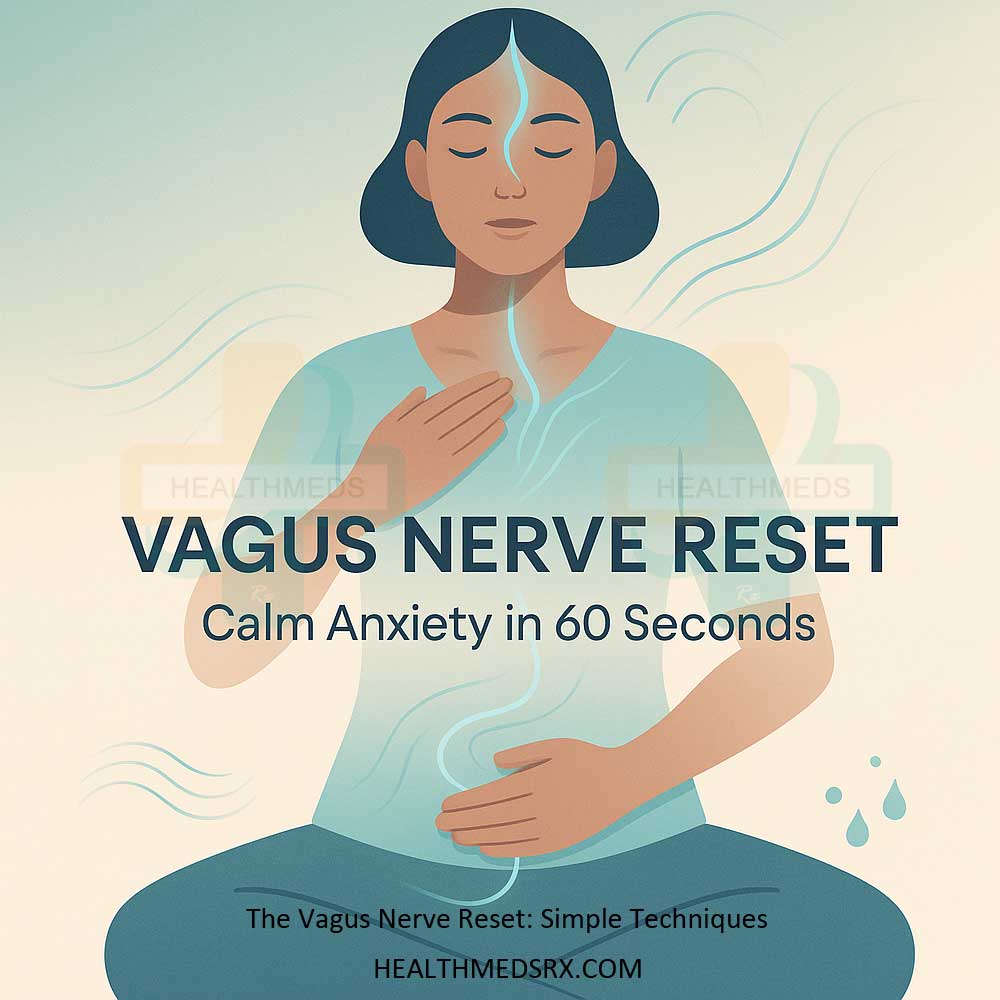
Anxiety which at times may tie up every aspect of your day from work to personal relationships and sleep. You may feel like you are trapped in a constant state of worry and racing thoughts which leaves you overstimulated and out of control. What if you had access to your body’s inborn calming response to get quick relief from anxiety in the middle of a stressor?
That which the vagus nerve does is act as a built in reset for anxiety. This powerful nerve serves as a bridge between your brain and body which in turn puts you from panic to peace. Also you can bring it on with simple science backed techniques which see results in as little as 60 sec. These methods for which no special equipment or medication is required, which you can do anywhere at any time to quickly calm anxiety.
Understanding the Vagus Nerve and Its Role in Anxiety
The vagus nerve is what has the greatest length of all cranial nerves in your body. It begins at the brainstem and makes its way through your neck, into your chest and abdominal areas. This nerve is so named for its wandering course which travels through the body. It is a key player in your parasympathetic nervous system which in turn is what helps your body to calm down from stress. The vagus nerve serves as a communication superhighway between your brain and main organs.
Functions of the Vagus Nerve
The vagus nerve has several important functions:
- Heart rate control: It slows down your heartbeat when you’re safe and relaxed.
- Digestive processes: It manages stomach acid production, gut motility (the movement of food through the digestive tract), and nutrient absorption.
- Respiratory rhythm: It influences your breathing patterns and depth.
- Immune response: It helps modulate inflammation throughout your body.
How the Vagus Nerve Relates to Anxiety
To know the role of the vagus nerve in anxiety it is very important to understand how it functions: when does this nerve fire up, when does it send out signals to your body to leave the sympathetic “fight or flight” state, which it enters into, and instead to enter the parasympathetic “rest and digest” mode.
This biological switch directly counteracts anxiety by:
- Reducing cortisol levels (the stress hormone)
- Lowering blood pressure
- Promoting stress recovery
In simple terms, a well-functioning vagus nerve acts as your body’s natural anxiety brake system.
What is a Vagus Nerve Reset?
A vagus nerve reset is a set of very basic and non-invasive practices which stimulate the vagus nerve through the body’s own systems. These unmedical methods put into play certain physical actions which in turn engage the parasympathetic nervous system without the use of special equipment, medications, or clinical intervention.
When you do a vagus nerve reset what you are doing is sending signals through this cranial nerve which in turn tells your body to go into a more calm state. What is great about these vagus nerve stimulation methods is how accessible they are, you can do them anywhere at any time using only your own body and resources like water or your voice which you have right at your disposal.
These present which is a different set of what you will do from what is put forth in a clinical setting. Vagus nerve stimulators which we put in for issues like epilepsy or treatment resistant depression deliver electrical pules to the nerve.
What we are to present here are gentle things you can do yourself which play into your body’s natural calming responses. These are in addition to what you may be doing in a professional setting for your anxiety but are to be used as tools in your day to day life not as a substitute for what is put in place for severe issues which require medical attention.
Simple Techniques to Calm Anxiety in 60 Seconds
1. Slow Deep Diaphragmatic Breathing (4-7-8 Method)
Diaphragmatic breathing which includes long exhalations is a very effective way to reduce anxiety quickly. Also the 4-7-8 method which Dr. Andrew Weil designed gives a deep breathing structure that at which you may see results in a matter of moments.
Here’s how you can do this breath control exercise:
- Use your hands – Place one hand on your chest and the other on your belly to ensure you’re breathing from your diaphragm
- Exhale fully – Breathe out completely through your mouth, making a whooshing sound
- Hold your breath – Keep the air in for a count of 7
- Exhale fully again – Breathe out through your mouth for a count of 8, making that whooshing sound once more
In this case what we do is focus on exhalation. As you lengthen the exhalation beyond the inhalation you are triggering your vagus nerve to relax. You may do this cycle 3 to 4 times for best results although doing it once will still start the calming process.
2. Humming, Chanting, or Singing
Vocal sounds have a direct effect on the vagus nerve which in turn produces a calming effect in the body. As you hum, chant or sing the vibrations from your voice travel through your throat and into your chest, at the same time they are massaging the vagus nerve which runs through those areas. What you put out vocally is a form of stimulation that triggers the parasympathetic response which in turn causes your body to go into a more relaxed state..
The beauty of humming for relaxation lies in its simplicity. You can practice this technique anywhere:
- Hum your favorite tune while waiting in line
- Chant a simple “om” sound during a bathroom break
- Sing along to a song during your commute
- Create a low, sustained hum for 30-60 seconds when stress hits
At lower pitches and longer durations vagal activation increases which you will notice in your chest and throat which will be vibrating, that is the vagus nerve stimulation via sound in real time. I have used this before big meetings and the immediate effect of grounding you is great.
3. Cold Water Exposure
Cold at first exposure causes the body to react physiologically to cold which in turn stimuli the vagus nerve via special receptors in the face. Upon contact of cold water with the facial skin especially around the eyes and forehead what scientists refer to as the “dive response” is triggered which in turn slows the heart rate and directs blood flow to important organs. This cold water face splash method puts forth one of the quickest ways to put your nervous system from a state of panic into one of calm.
Through a few simple techniques you can practice cold water exposure:
- The Face Splash Method: Just pour some cold water over your face for 15 to 30 seconds over your forehead, eyes, and cheeks. You will see the calm almost right away as your heart rate goes down.
- Cold Compress Application: Keep in your freezer a cold pack or ice pack which you wrap in a thin cloth. At the onset of an anxiety attack put it on your forehead and eyes for 30 to 60 seconds. Also that which is a cold pack is portable and convenient, you may use this at any time you have access to a freezer.
- Quick Wrist or Neck Cooling: Drench your wrists in cold water or put a cold damp cloth at the back of your neck. These areas have high concentration of blood vessels which are very near the skin also which in turn will increase vagus nerve stimulation.
The cold water experience is very simple and fast. No special gear or training is required of you, all we ask is that you have access to cold water. Also many report that they feel a great peace out of which almost immediately may come upon you after only a few seconds of cold water application which makes this a very useful technique at the height of an acute anxiety attack.
4. Gargling and Gentle Throat Engagement
Gargling water engages the muscles at the back of your throat, directly stimulating the vagus nerve that runs through this area. This mechanical activation creates an immediate signal to your parasympathetic nervous system, triggering a calming response that complements other techniques like diaphragmatic breathing and cold water exposure in The Vagus Nerve Reset: Simple Techniques to Calm Anxiety in 60 Seconds.
How to practice gargling for vagal tone increase:
- Take a mouthful of room-temperature or slightly cool water
- Make the gargling sound as loud as comfortable, creating strong vibrations
- Repeat 2-3 times for enhanced throat stimulation
You can perform this simple practice at your bathroom sink whenever anxiety strikes. The vigorous muscle contraction required for gargling provides a more intense vagal activation than passive techniques, making it particularly effective when you need rapid relief. Some people combine this with humming afterward to extend the calming benefits through sustained vocal vibration.
Signs You’ve Successfully Activated Your Vagus Nerve
Your body provides clear feedback when you’ve effectively stimulated the vagus nerve. Pay attention to these slowed heart rate indicators as you practice the techniques: you’ll notice your pulse becoming steadier and less rapid, often accompanied by a sense of your chest opening up.
Physical signs of relaxation include:
- A noticeable drop in your heart rate within 30-60 seconds
- Muscles releasing tension, particularly in your jaw, shoulders, and neck
- Deeper breathing cues like automatic yawns or sighs
- Increased saliva production (a parasympathetic response)
- Warmth spreading through your hands and feet as blood flow improves
- A gentle gurgling sensation in your stomach as digestion activates
The emotional shift is equally telling. You’ll feel a distinct change from anxious to calm, as if someone turned down the volume on your racing thoughts. Many people describe feeling more grounded, present, or centered, like they’ve stepped out of a mental fog. Your ability to focus improves, and that overwhelming sense of urgency or panic begins to fade.
Incorporating Vagus Nerve Resets into Daily Life for Long-Term Anxiety Management
Building stress resilience happens when you practice vagus nerve resets consistently, not just during moments of panic. I’ve found that weaving these techniques into your existing routines transforms them from emergency tools into powerful preventive measures. Your nervous system literally learns to return to calm more quickly with repeated practice.
Effortless daily relaxation habits can be achieved by anchoring them to activities you already do:
- Practice the 4-7-8 breathing method during your morning coffee or right before bed
- Hum while you shower or sing along to music during your commute
- Gargle with water after brushing your teeth
- Splash cold water on your face when you wash up in the morning
- Take brief walking breaks between work tasks to engage rhythmic movement
Maintaining nervous system health requires the same commitment you give to physical exercise. Set reminders on your phone to pause for 60-second resets throughout your day. You’ll notice your baseline anxiety levels dropping as your vagus nerve becomes more toned and responsive. This consistent activation creates a buffer against daily stressors, helping you bounce back faster when challenges arise.
When to Seek Professional Help Despite Using Vagus Nerve Resets
Vagus nerve interventions report to be very helpful for day to day anxiety, but they do best in a role which supports other therapies instead of standing alone as the only solution. Also note when your symptoms require professional help.
Seek help from a mental health professional if you experience:
- Persistent anxiety that interferes with daily activities, work, or relationships
- Panic attacks that occur frequently or without clear triggers
- Physical symptoms like chest pain, dizziness, or difficulty breathing that don’t improve with vagal techniques
- Intrusive thoughts, compulsive behaviors, or avoidance patterns
- Sleep disturbances lasting more than two weeks
- Feelings of hopelessness or thoughts of self-harm
Chronic anxiety is best treated with a mixed approach. Your therapist may suggest cognitive behavioral therapy, EMDR, as well as other evidence based interventions which also include vagus nerve techniques. In some cases medical intervention is required which includes when anxiety is a result of trauma, chemical imbalances, or co-occurring conditions.
These basic tools add to your mental health kit which we may use for support, they are not to replace professional care when you do require it.