
Measles Explained: Symptoms, Care, Diet & Recovery in the USA

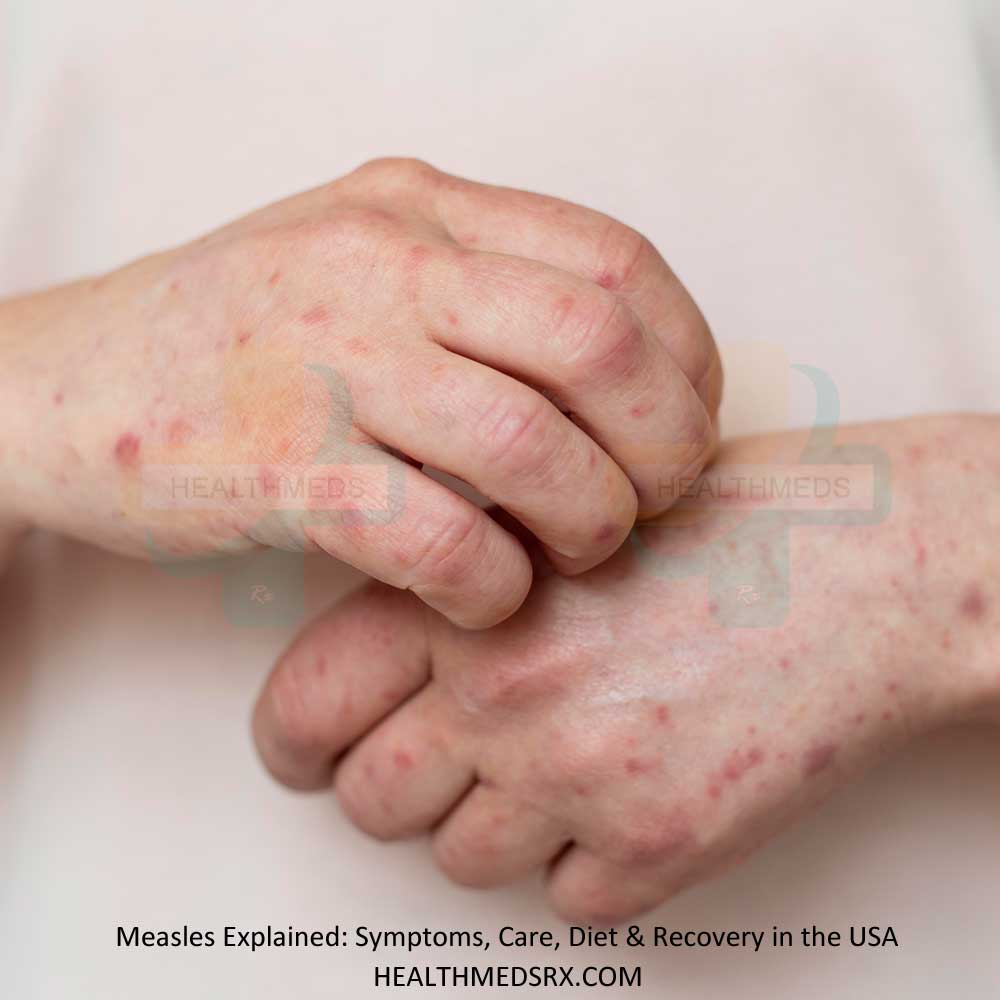
Measles is a highly contagious viral disease that many people in the United States thought was gone. While the US eliminated continuous measles transmission in 2000, the virus can still be introduced through international travel, leading to outbreaks, especially in communities with low vaccination coverage.
This guide is written for two main readers:
- Those who want to understand measles clearly
- Those who are already sick or caring for someone with measles.
It explains what this disease is, how it spreads, how to manage symptoms at home, and answers the most commonly searched questions about recovery and care in the US.
What are Measles: Understanding the Viral Infection?
Measles is caused by the measles virus, which primarily affects the respiratory system and then spreads throughout the body.
It is one of the most contagious viral illnesses, spreading through tiny droplets in the air when an infected person coughs, sneezes, or even breathes in proximity. The virus can remain active in the air for up to two hours, which makes exposure possible even without direct contact.
After entering the body, the virus multiplies silently during an incubation period of about 7 to 14 days. Early infection places the immune system under stress, which is why initial symptoms can feel intense. While this disease can occur at any age, unvaccinated individuals are most at risk.
The reasons Why Measles Still Occurs in the United States
To a great number of Americans, it is hard to believe that measles is still prevalent nowadays. Measles is not eradicated in the world although it was declared eliminated in 2000 in USA.
The travelers may bring the virus to the communities in the US where there is inadequate vaccination. There are frequent outbreaks in school and day care facilities and isolated communities where the population is not vaccinated.
Since this disease is an airborne disease and very contagious, as a result of not taking precautions, one case can cause numerous cases of the disease.
Early Measles Infection in children and adults
The initial symptoms of this disease tend to look like a severe cold or the flu. These are fever with high intensity, continuous cough, runny nose, reddish or watery eyes and excessive fatigue. Children will become petulant, and adults will be weak and sore.
This stage is the first phase and it takes several days and is important since the individual is very contagious before the typical rash develops.
Measles Rash Symptoms: The Development and Appearance
The rash is generally three to five days after the onset of the fever. It usually begins on the face, typically around the hairline or behind the ears, and extends downward to the neck, chest, arms, legs, and feet. The rash is reddish, spotty, and could eventually be combined into bigger spots. The peak of fever can recur with the expansion of the rash, and the itch can become more pronounced with the onset of the disappearance of the rash, as the rash disappears.
Home Treatment of measles: What Doctors recommend in the USA
Measles does not have any particular antiviral therapy. Treatment is aimed at promoting the immune system and avoiding complications. In the United States, doctors prescribe:
- Rest and isolation
- Rehydration to avoid dehydration.
- Self-management of fever (as recommended by a doctor).
- Watch for such warning signs as trouble breathing or continuous high fever.
- Severe complications (e.g., pneumonia or dehydration) may require hospitalization.
Optimal Dietary Interventions to Reduce Measures of Measles
During measles, an excellent diet helps the immune system. The weakening of the digestion also occurs due to the high fever and fatigue, which is why the consumption of soft and easy-to-digest foods is prescribed.
Examples are rice, porridge, soups, bananas, applesauce, toast and the lightly cooked vegetables. These fluids are of particular importance and must contain water, oral rehydration solutions, coconut water, and clear broths.
Small and frequent meals are superior to big ones. Spicy, fried, sweet or very cold foods are to be avoided because they may aggravate the nausea and pain.
Care and Treatment of the Skin and Rash during Measles
Treatment of measles rash is a common issue for caregivers and patients. There should be gentle skin care where discomfort and infection are avoided.
Key tips include:
- Brief bathing in lukewarm water.
- Slightly perfumed or unscented baby soap or soap.
- Do not scrub or use hard cleaners.
- Drying the skin and putting on loose and cotton clothes.
- Applying low potency moisturizers or calamine lotion to dryness and itching.
Powerful medicated creams, unapproved remedies, or herbal pastes are not to be used without the advice of a healthcare professional.
Measles Duration and Coping Measles Recovery
Measles rash and fever normally take approximately one week to go away. Fatigue can persist for up to one to two weeks following the manifestation of apparent symptoms, particularly among adults. Early restoration to normalcy may slow down recovery. The rest and hydration at this time are critical in terms of complete recovery.
When to Seek Medical Attention for Measles in the USA?
Whilst the majority of the cases can be cured at home, in case of serious symptoms, medical care is required. Patients and caregivers should call a health practitioner as soon as there is:
- Difficulty breathing
- Persistent high fever
- Severe dehydration
- Confusion or seizures
- A child who is not willing to take a drink or food.
Early treatment minimizes the possibility of complications and a safer recovery is guaranteed.
Prevention and Vaccination of Measles in the United States
The best mode of prevention of measles is vaccination. Although the household and close contacts with the person who is cured should receive the MMR vaccine, even after recovery. This secures both the individual and communities, particularly the vulnerable groups such as babies and those with weak immunity.
Measles Frequently Asked Questions
Is it possible that adults contract this disease in the United States?
Yes. Unvaccinated adults also have the potential to contract this disease and get more serious symptoms compared to children.
Is it possible to be infected with measles twice?
Immunity is normally lifelong after one gets over this disease. Recurrent infections are highly uncommon.
What is the length of contagion?
The incubation period of a person typically starts approximately four days before the onset of the rash and lasts up to four days following the onset of the rash.
Does measles pose a threat to pregnant women?
Yes. Measles exposes people to miscarriages, preterm birth, low birth weight. Women who are pregnant and have been exposed to this disease are supposed to seek the services of a doctor immediately.
Can measles be treated at home?
Most cases can be managed with rest, hydration, fever management, and skin care. Medical attention is required if severe symptoms develop.
What foods are best during measles recovery?
Soft, easy-to-digest foods like rice, porridge, soups, bananas, applesauce, toast, and yogurt (if tolerated) are recommended. Fluids are critical.
What foods should be avoided?
Spicy, fried, oily, sugary, or very cold foods should be avoided until recovery is complete.
How should the rash be cared for?
Use mild soap, lukewarm water, loose clothing, and gentle moisturizers or calamine lotion. Avoid scratching or harsh treatments.
Can you bathe during measles?
Yes. Short baths with lukewarm water are safe and soothing.
How long does full recovery take?
Fever and rash resolve within about a week, but fatigue may last one to two weeks.
When should you see a doctor?
Seek care immediately for breathing problems, persistent fever, dehydration, confusion, seizures, or refusal to drink fluids.
Should household members get vaccinated after someone recovers?
Yes. Vaccination is essential for unvaccinated contacts to prevent further outbreaks.