
Cracking Your Knuckles Bad for You? Science-Backed Facts & Myths

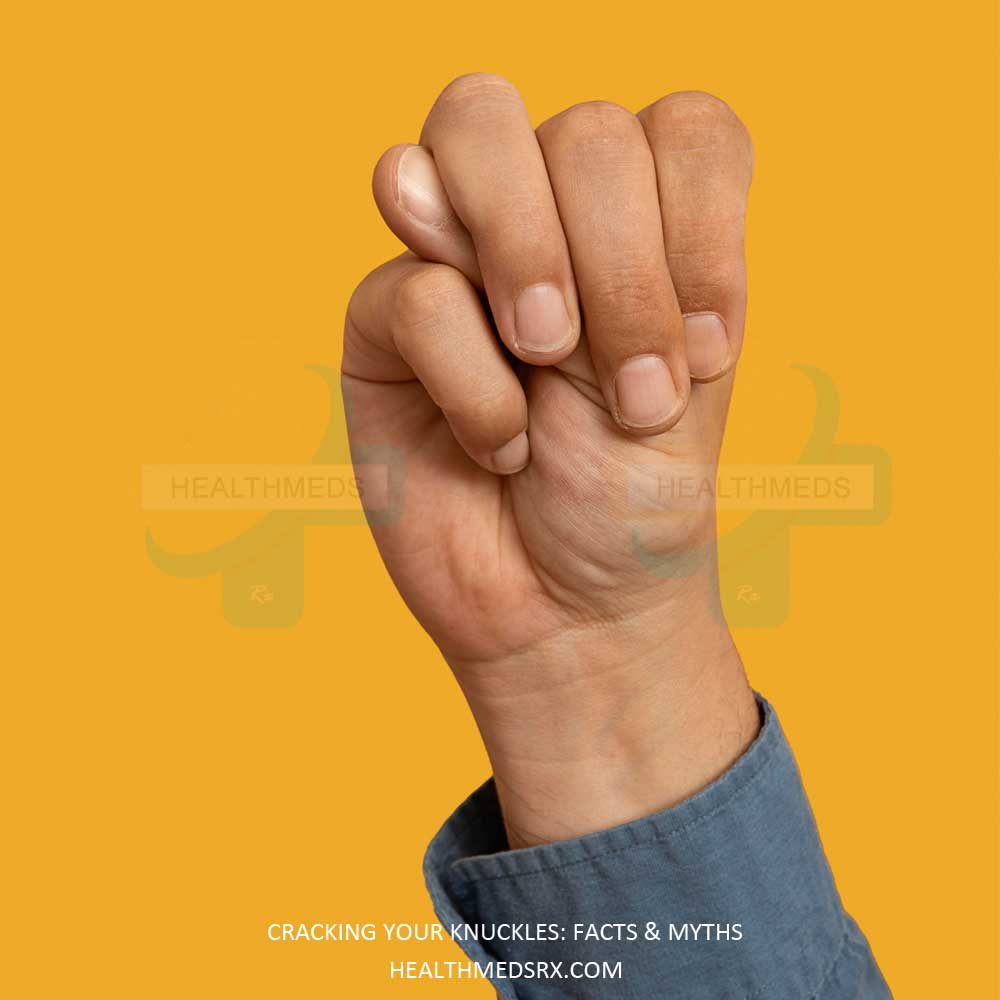
Pop. Crack. Snap. The sound of knuckles cracking has been a hot topic for many years. Parents tell kids that cracking knuckles causes arthritis, while others say it’s safe. But what does the scientific proof say about this habit of cracking knuckles?
After a lot of medical studies and talking to bone experts, we found the real facts about why joints crack and whether this habit is harmful to you.
Whether you often crack your knuckles or you get upset by the noise. This whole guide will provide clear answers to all your doubts about what takes place when you crack your knuckles.
The Study of the Crack: What Happens When You Crack Your Knuckles?
To know if knuckle cracking is bad, we must look at what’s happening in your joints. The medical term for joint breaking is tribonucleation – a way where joints pull apart and fluid in the joints quickly shifts pressure.
Step-by-step guide on the science behind knuckle cracking
- Joint split: When you tug or flex your finger to crack, you make a gap between the bones in a joint.
- Pressure Shift: This quick split makes a big drop in the fluid (synovial fluid) in your joints, known to be their natural lubricant.
- Gas bubble: The lower pressure pushes dissolved gases (mostly nitrogen) to leave the solution and create bubbles quickly.
- The Pop: These bubbles break almost straight away, making that special pop sound you hear.
- Recovery Time: It takes 15-30 mins for gases to go back into the joint fluid (synovial fluid), that’s why͏ you can’t just crack the same joint again.
In a groundbreaking 2015 study published in PLOS ONE, researchers used real-time MRI technology to see the process out. They reported that the popping sound is a result of joint fluid cavity formation and also noted that:
- Joint width increases by 15% during cracking.
- The sound occurs in less than 300 milliseconds.
- The pressure drop is directed at -4.5 atmospheres.
- Debunking Common Myths About Knuckle Cracking
As we’ve seen what happens when you crack your knuckles, let’s look at and dispel the most persistent of those myths.
Myth 1: Knuckle cracking causes Arthritis
The Truth: Multiple large scale studies report that there is no relationship between knuckle cracking and arthritis.
Dr. Donald U in a 60-year study of self which he did. He would crack the joints in his left hand at least twice a day and never touch the joints in his right. After six decades, he found out that it is:
- No difference in arthritis between hands
- No visible joint damage
- No loss of function
In 2009 he won the Ig Nobel Prize in Medicine for his work. Also in 2011 a study that appeared in the Journal of the American Board of Family Medicine reported on 215 people who came to the same conclusion. There is no increased risk of arthritis in knuckle crackers.
Myth 2: Weakness in your grip
The Truth: While a 1990 study reported that frequent cracker consumers had weaker grips is out there, we haven’t seen that play out in larger studies since. In 2017 Clinical Anatomy did a review which reported there is no evidence that knuckle cracking changes grip strength over time.
Myth 3: It lengthens your joints
The Truth: Normal knuckle cracking does not cause long term joint damage. In a 2018 Radiology study which used dynamic ultrasound we saw no change in joint space or ligament stretch after cracking.
Risks and Issues Related to Cracking Joints
While we see that in general, the act of cracking your knuckles is harmless, in some cases, we should be careful. Let’s look at what the side effects of joint cracking are:
Possible Issues From Excessive Cracking:
- Temporary Swelling: People who often crack their knuckles note they have mild swelling which usually goes away in hours.
- Brief Reduced Grip Strength: After cracking some see a loss of grip strength for 5-10 minutes.
- Ligament Irritation: Over time this may irritate adjacent soft tissues.
Warning Signs to Watch For
See your doctor if you have:
- Pain during or after cracking
- Persistent swelling
- Redness or warmth in the joint
- Noticeable changes in joint shape
- Locking or catching sensations
These may be signs of a pre-existing condition like tendon injuries or early osteoarthritis which is not a result of cracking.
Psychology of why people crack their knuckles
Given that there is no proof of physical health benefits from knuckle cracking yet we see many people who do it. In the fields of psychology and neuroscience we may find the reason for this.
4 Reasons People Crack Knuckles
- Sensory Satisfaction: Nuckle cracking is a rewarding sound that does the same as other satisfying sounds (like that of broken bubble wrap).
- Stress Relief: For some it is a tic that gives temporary relief from stress.
- Proprioceptive Feedback: The feeling is of joint “release” which some find soothing.
- Social Factors: In some of which it is a learned issue via observation.
Can Knuckle Cracking Be Addictive?
While not physiologically addictive it can develop into a compulsion. A 2016 study in the Journal of Behavioral Addictions reported:
- In 26% of cases crackers had difficulty stopping.
- 18% reported anxiety when prevented from breaking in.
- 12% of people around the world do it at least 50 times daily.
Expert Recommendations for Safe Joint Cracking
Do:
According to present medical research which reports:
- Crack gently without excessive force
- Wait 15 to 30 minutes between the same joints. Read how to strengthen your joints to get familiar with tips to maintain body joints health.
- Proper water intake is key which in turn supports healthy synovial fluid.
- Watch out for pain or joint changes.
Don’t:
- Do not forcefully crack the joints that don’t like to crack.
- Use equipment to crack joints.
- Ignore persistent pain or swelling
- Crack others’ joints without proper training
Frequently Asked Questions on knuckle cracking
Why do some people have joints that crack more easily?
Joint structure matters, volume of synovial fluid, age, and past injuries.
Is it different from other joints (neck, back)?
The same may be said of the method but Spinal cracking has greater risks of injury if done forcefully.
Can you “run out of cracks”?
No – bubbles reform naturally, though joints may crack less with age.
So should one crack knuckles or not
After going through all the scientific research on the topic of knuckle cracking we have determined that Knuckle cracking is for the most part harmless when performed in moderate amounts. We don’t have any reliable reports of it causing arthritis or long term damage. But as with any habit it is also possible to do it too much.
For most people: Crack when you like but pay attention to how your body is responding.
If you experience pain: Seek out a health care provider.
As the sound you hear is in fact from gas bubbles which are forming and breaking that’s it. So next time someone tells you that you’ll get arthritis from cracking your knuckles, you can tell them medical studies say this is a harmless thing to do.