
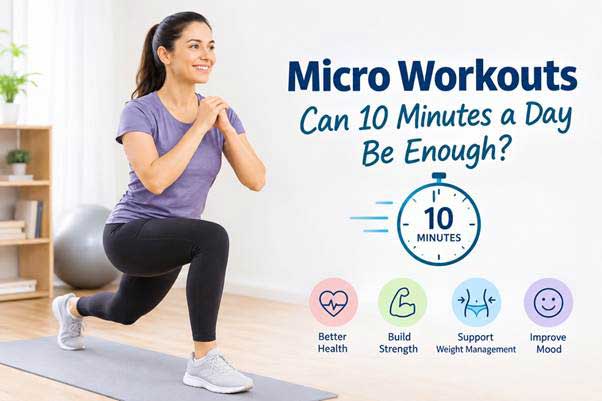

What are Micro Workouts?
When work, family and daily activities take up your time, it can be hard to find time for exercise. With this mindset, people think that exercising for an hour at the gym will make them fit, and they’ll save their exercise for later.
Micro workouts are a different way. These mini workouts can be incorporated into your daily activities and don’t require you to overhaul your lifestyle. Being active can be achieved by brisk walking before work, some strength training exercises during a break or 10 minutes of activity at home.
However, can 10 minutes of the day make a difference to health? Yes, provided you can choose activities that are suitable and undertake them regularly. However, the benefits are different depending on fitness, exercise intensity and exercise objectives.
Micro workouts are brief sessions of exercise, 5-15 minutes in length. These may be resistance exercises, or walking, climbing stairs, squats, wall push-ups or stretching.
They are not like workouts you may have in the past; they do not need a lengthy period of workout, costly devices or a gym membership. Several exercises can be done at home or when taking breaks at work.
The key to this is to make it easier to fit in moving around. Although the exercises don’t require an hour, you can use small periods of free time to move your muscles and increase physical activity during the day.
Are 10 Minutes of Exercise Enough?
There are different goals a 10-minute exercise session can be effective for.
- For general health: With short-duration exercise, there can be an overall improvement in health as it encourages activity during the day and helps to limit prolonged sitting. Alternatives are brisk walking, biking and dancing.
- Resistance exercises like banded exercises, wall push-ups, squats & lunges can target several muscle groups at once for muscle strength. Slowly adding repetitions or resistance to the exercises can help develop strength.
- Micro workouts are also part of a person’s energy expenditure throughout the day, and diet, sleep, level of activity and personal health factors are all also important to weight management.
- For Stamina: If you are a beginner, use short exercise sessions to build up tolerance to exercise. As they get fitter, they can increase and/or intensify their sessions.
There are guidelines for physical activity for adults (150 minutes of moderate-intensity aerobic activity weekly, and strengthening of muscles at least 2 days weekly). Therefore, 10 minutes per day is a reasonable amount of time to start, but might need increased activity to meet these recommendations.
Why Micro Workouts Can Be Effective?
- They make consistency easier
One of the common fitness problems is maintaining exercise. A long session after a hectic day might appear too much, and 10 minutes might appear too easy.
To establish a habit of exercising, it’s helpful to start with a small target. If exercising becomes part of your lifestyle, you can gradually increase your activity level.
- They interrupt long periods of sitting time
Spending hours at a desk might reduce the time you have for walking around. Even those who exercise a few times a month can be inactive for all of the day.
If sitting for long periods of time, take short walking breaks, gentle stretches and simple body weight exercises. The activities will remind you to get active more during the day as opposed to sitting for hours.
- They give a mental break.
Exercise could have a positive effect on mood and on coping with normal stress. Taking a short break to get outside to get some fresh air or a few minutes to move to a different task can give you a welcome respite from work and screens.
While exercise may be a tool to help manage all stress, it can be a helpful component of a healthy life.
- They are not very demanding in terms of equipment.
There’s no need to have a gym or complicated equipment to start. Many micro workouts will focus on exercises that don’t use weights and equipment, and take up minimal space.
This is helpful for those who have busy lifestyles or don’t have access to fitness centres.
A Quick and Easy 10-Minute Micro Workout Routine.
Do this exercise routine at home, if you can, starting at the level that is suitable for you.
- Minutes 1–2: Warm-up
Prep your body by walking in place and moving shoulders, arms and legs gently.
- Minutes 3-4: Sit-to-stand or squats
Do repetitions in a controlled manner to build up your legs and glutes. Sit on a chair to support yourself, if necessary.
- Minutes 5–6: Wall push-ups
Rest your hands on the wall and bend and straighten your elbows one by one, slowly, engaging chest, shoulders and arms.
- Minutes 7-8: Walk in place quickly
Build up to breathing slightly faster but not too fast by increasing pace.
- Minutes 9–10: Cool-down
Take your time and end with some relaxation stretch exercises. Do not push or use forced movement or push through pain.
Start at a good level of intensity and focus on good technique. When you have a chronic health condition, injury or safety concerns for exercising, seek advice from an appropriate healthcare professional.
How to Build Micro Workouts into Your Day?
The simplest approach to keeping an exercise regimen is to link it with things you are currently doing.
You can do a brief movement session in the morning, do a walk during lunchtime or have a few exercises in between work tasks. An evening routine may also be a chance to get some exercise given that you’ve been sitting all day.
If you can’t find ten minutes, break up the task into shorter periods of time. The aim is to develop a sustainable movement pattern.
To get more fitness benefits, do strength training along with aerobic exercise. As your stamina grows, build up your activity levels over time; don’t get stuck on the same activity forever.
Common Mistakes and Things to Avoid Doing
Don’t believe that a short workout has to be a vigorous one. Moderate activity is suitable for beginners, as they do not have to exercise to the limit of exertion. Challenge them more as they start to get used to it.
Don’t expect physical transformations to happen overnight. These gains in strength, stamina and exercise tolerance are a gradual process. Be aware of little advances, e.g. walking more comfortably or doing exercises more under control.
Also, keep in mind that exercise is in addition to other healthy behavior. Good nutrition, adequate sleep, recovery and daily physical activity are all important to long-term wellbeing.
It’s not a perfect schedule that is required to become more active. Begin with 10 minutes and create a healthy routine, day-by-day.