


Blood donation is one of the most basic ways to make a difference in the life of another. One gift can benefit accident victims, surgical patients, cancer patients and individuals with blood disorders. Even with so many benefits to organ donation, there is still a hesitation by many people to donate for safety, side effects or misinformation that they have heard over the years.
So, is blood donation safe? Yes, in most healthy adults. Blood donation is a very carefully supervised medical procedure carried out by trained medical professionals using sterile single-use equipment. There are some short-term side effects and restrictions, but there are very few serious complications.
Let’s check out the advantages, risks and myths of blood donation.
What is Blood Donation?
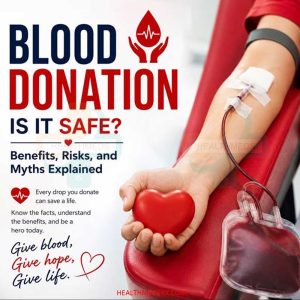 Blood donation is the act of giving a small portion of your blood to help persons in need of transfusion. The donated blood is divided into various components, such as:
- Red blood cells
- Plasma
- Platelets
- Cryoprecipitate
These items have various medical functions and may be used for more than one patient.
The actual donation of whole blood will only take approximately 8 – 10 minutes, and the total appointment will take 30 – 60 minutes, including registration time and a short health check-in.
Is Blood Donation Safe?
Yes, it is very safe to donate blood at licensed blood donation centres.
Each donor must complete a health evaluation before donation, which involves:
- Medical history review
- Temperature check
- Blood pressure measurement
- Pulse rate
- Hemoglobin test
- Weight verification
These screenings are to ensure the safety of donating for both the donor and recipient.
No risk of infection (HIV, Hepatitis), needles and collection bags used during donation are sterile and disposable.
Donors are carefully monitored before, during and after the process to make sure they are safe.
Benefits of Blood Donation
Giving blood has additional benefits.
- Saves Lives
The greatest benefit is the opportunity to save lives. Hospitals require blood every day for:
- Emergency surgeries
- Childbirth complications
- Trauma care
- Organ transplants
- Cancer treatments
- Blood disorders such as sickle cell disease
A reliable blood supply is essential because blood cannot be manufactured artificially.
- Free Health Screening
Before every donation, your basic health indicators are checked.
These include:
- Blood pressure
- Pulse
- Body temperature
- Hemoglobin level
This does not replace routine health check-ups, but can sometimes detect health issues that need to be further investigated.
Although this isn’t a replacement for regular medical checkups, it can sometimes identify health concerns that require further evaluation.
- Contributes to a Healthy Blood Supply
Donors are regular donors to ensure that hospitals and emergency services have enough blood supplies. Blood products have limited shelf life, and regular donations are necessary.
- May Help Maintain Iron Balance
A single donation of blood takes some of the iron out of the body. Donating blood (medically supervised) may help maintain healthy iron levels for people who donate blood and have an iron level that is already high.
But such should be no substitute for medical treatment for iron-related conditions.
- Promotes Community Well-being
Blood donation fosters a culture of caring and a caring community. A lot of donors say they feel good that they helped another person get better.
Are There Any Risks?
While blood donation is safe, it does have a few temporary side effects.
Mild Dizziness
Lightheadedness is a side effect for some donors.
This typically goes away in a few minutes after:
- Drinking fluids
- Eating a snack
- Resting briefly
Bruising
There can be a small bruise around the site of needle insertion.
This usually goes away in a few days on its own.
Fatigue
Many people feel tired for several hours after donating.
Generally, avoiding hard exercise and keeping well hydrated promotes recovery.
Temporary Drop in Blood Pressure
In some cases, blood pressure can drop for a short time, typically after the first time being donated or if a donor forgoes breakfast beforehand.
Rare Complications
Complications are rare but can happen and include:
- Fainting
- Prolonged bleeding
- Nerve irritation
- Allergic reactions to bandages
Donation centres are well-versed in dealing with these situations quickly.
Common Myths About Blood Donation
There are a lot of misconceptions that make people not want to donate. Let’s debunk some myths vs. reality.
Myth 1: Blood Donation Is Painful
Fact: When the needle is inserted, most people only feel a little sting. Giving is typically painless.
Myth 2: You Can Catch Diseases by Donating.
Fact: This is false.
All the equipment used during blood donation is single-use, sterile and disposable.
Donating blood does not pose any risk of getting infected.
Myth 3: Blood Donation Makes the Body Weak.
Fact: Healthy persons replenish the donated blood quickly.
Most people recover to normal function within a day, following adequate hydration and rest.
Myth 4: Older Adults Can’t Donate.
Fact: Many older people who are healthy can still donate blood, as long as they comply with the guidelines for blood donation and pass the health screening.
Myth 5: Vegetarians Can’t Donate Blood.
Fact: If hemoglobin levels are adequate, then a vegetarian can donate.
Eating well with iron, vitamin B12 and folate will help blood production.
Myth 6: Donors need to know their blood type before donating.
Fact: Blood donation centres will identify the blood group of the donated blood.
It is not required to have it memorized.
Who can donate blood?
Most healthy donors should meet the following eligibility criteria:
- Be in good overall health
- Meet the minimum age requirement
- Meet the minimum weight requirement
- Have acceptable hemoglobin levels
- Be free from certain temporary illnesses
Some conditions may require delaying donation, including:
- Fever or active infection
- Recent surgery
- Certain medications
- Recent tattoos or piercings (depending on local regulations)
- Pregnancy or recent childbirth
Be honest when answering screening questions to keep everyone safe.
Before donating blood, here are some tips to keep in mind:
Good preparation will make the experience smoother.
Before Donation
- Drink plenty of water.
- Have a healthy meal.
- Don’t donate when you are hungry.
- Wear comfortable clothing with sleeves that roll up easily.
- Bring identification if required.
Tips After Donating
After donating:
- Take additional fluids for 24 hours.
- Apply the bandage for a few hours.
- Don’t lift heavy loads on the donation arm.
- Avoid strenuous activity the rest of the day.
- Consume foods rich in iron, including spinach, beans, lean meat and fortified cereals.
Most donors recover in one day.
How many times can you donate?
The frequency depends on the type of donation.
In whole blood donation, most of the donation programs permit healthy persons to donate whole blood every 8-12 weeks, depending on the country or local regulations.
Donating platelets and plasma can be on different schedules.
Always follow the advice of the blood donation centre.
When Should You Avoid Donating?
If you have any of these:
- Feel unwell
- Have a fever
- Recently had a serious infection
- Have low hemoglobin
- Are recovering from surgery
- Are pregnant or recently gave birth
- Have been advised by your healthcare provider to wait
Your safety is just as important as the safety of the person receiving the blood.