

Medical technology has revolutionized the diagnosis and treatment of cardiovascular conditions by doctors. Angiogram is one of the most significant diagnostic procedures that is being utilized nowadays. The test enables the doctors to view inside the blood vessels and detect issues that can affect the heart, brain, lungs, and other body parts.
An angiogram gives a clear picture of blood flow inside the arteries and veins and assists medical practitioners in identifying blockages, constriction, or other deformities. In case your doctor prescribed such a test, understanding its functioning is a way of not feeling overwhelmed during the process and feeling more prepared.
The following is an elaborate guide to all the information you need to know about the angiograms, why they are done, what they look like and what the recovery entails.
What Is an Angiogram?
An angiogram is a medical test undertaken to assess blood vessels in the body. It is a procedure that entails the administration of a special contrast dye into the blood and recording images with X-ray technology.
The contrast dye causes the blood vessels to be seen on the imaging screens so that the doctors can be able to identify the circulation problems that cannot be seen on the normal tests.
Angiograms have common use in the diagnosis of conditions like Coronary Artery Disease, which develops at the expense of plaque formation, where the arteries that supply blood to the heart are narrowed. In cases where the angiogram specifically studies the arteries of the heart, it is referred to as Coronary Angiography.
Why Is an Angiogram Performed?
Physicians can prescribe an angiogram when there is some indication of a problem with blood flow or when other tests indicate that there may be a blockage of the arteries.
Common reasons include:
Heart Conditions Diagnosis.
An angiogram is used to determine the presence of blockages, which can either cause chest pains or lead to a heart attack.
- Investigating Unexplained Symptoms: The shortness of breath, dizziness, or intense fatigue may be signs of low blood flow in the body.
- Assessing Abnormalities of Blood Vessels: The test is able to indicate an aneurysm, constricting arteries or any other structural issues that may be affecting the circulation.
- Planning Medical Treatment: Angiograms are usually conducted by doctors before angioplasty or the insertion of a coronary stent to restore the normal flow of blood.
Types of Angiograms
Depending on the blood vessels that require examination, angiograms may be done on various sections of the body.
- Coronary Angiogram: This type deals with those arteries that provide blood to the heart and is usually applied in cardiology.
- Cerebral Angiogram: Applied to scan blood vessels of the brain, to aid in the identification of an aneurysm, stroke, or vascular malformation.
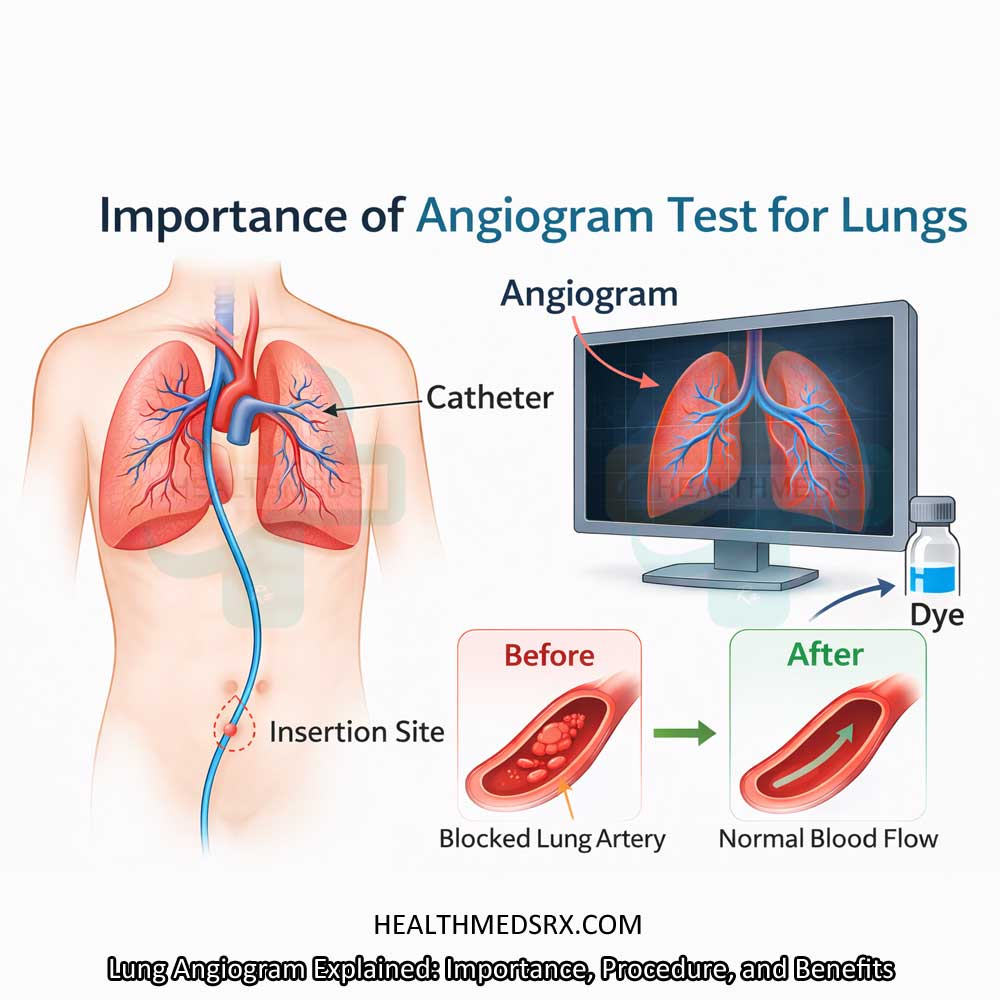
- Pulmonary Angiogram: This test measures the degree of blood vessels in the lungs, and it is possible to detect diseases such as Pulmonary Embolism.
- Peripheral Angiogram: A peripheral angiogram is an examination of the arteries in the arms, legs, and other parts of the body, other than the heart and the brain.
All of them are based on the same procedure, and they are concentrated on another part of the circulatory system.
How to Prepare for an Angiogram
Angiogram preparation is normally commenced several days before the test.
Medical Evaluation:
Your physician will study the medical history, medication, and allergies of the patient, especially the reaction to contrast dye.
- Fasting Before the Test: Patients are normally advised not to take any food or beverages for a few hours before the process.
- Medication Adjustments: Some medications would have to be discontinued, especially blood-thinning medications or medicines used to treat diabetes.
- Consent and Instructions: Before consenting to the procedure, the medical staff will discuss the procedure, the risks, and the care provided after the procedure.
These tips are essential to make sure that the test is conducted without any harm or mistakes.
What Is the Process of the Procedure?
Angiogram procedure is commonly conducted in a hospital or in a special imaging laboratory.
Step 1: Local Anesthesia
The physician anesthetizes the site of the insertion of the catheter, which is normally the wrist or the groin.
Step 2: Catheter Insertion
A catheter is a thin, flexible tube that is inserted through a blood vessel into an area that is being examined.
Step 3: Dye Injection
A contrasting dye is injected into the catheter. This stain brings out the blood vessels in the X-ray images.
Step 4: Imaging
The flow of the dye through the bloodstream is photographed with X-ray images, which determine the structure and the functionality of the arteries.
Step 5: Procedure Completion
Once the images are captured, the catheter is then removed, and pressure is applied to the site of insertion in order to prevent bleeding.
The whole process typically can last 30 to an hour, depending on the nature of the examination.
Is an Angiogram Very Painful?
Patients are afraid that an angiogram will hurt. As a matter of fact, the procedure is usually tolerable.
Since local anesthesia is applied, the majority of people experience mild pressure or slight discomfort during the insertion of the catheter.
Some patients may experience:
- A brief warm sensation when the dye is injected
- Slight pressure at the insertion site
- Temporary flushing
These are sensations that are brief, normally lasting a few seconds. The majority of patients are comfortable during the test.
What are the risks and Complications?
Angiograms are widely considered safe, but like any medical procedure, they carry some potential risks.
Possible complications include:
- Bleeding or bruising on the insertion site of the catheter.
- Allergic reaction to the contrast dye
- Infection
- Blood vessel injury
- Irregular heart rhythm
There are a few serious complications. To minimise the risks, medical specialists pay close attention to patients during and after the procedure.
Recovery After an Angiogram
Angiography recovery is normally fast. A great number of patients can go home the same day.
Immediate Recovery
The patients might be required to take several hours of rest as the doctors check the heart rate and blood pressure.
Activity Restrictions
At least 24-48 hours are to be taken up without heavy lifting and strenuous activity.
Hydration
Consumption of a lot of water aids the body in excretion of the contrast dye used during the test.
Monitoring the Insertion Site
One must observe any indications of swelling, bleeding, or infections.
Making yourself follow the advice of your doctor makes your recovery process easy.
What Do the Results Mean?
The doctor will look at the angiogram images, and based on the images, the doctor will ascertain whether the blood vessels look normal or not or whether there is evidence of blockage.
Possible results may include:
- Normal blood flow with no significant narrowing
- Partial blockage caused by plaque build-up
- Severe blockage that may require immediate treatment
In case of the blockage, the doctor might advise lifestyle modification, medicine, or surgery, including Angioplasty, which can allow the normal circulation of blood.
Angiogram vs. Other Imaging Tests
Several imaging tests can evaluate heart and blood vessel health. However, angiograms provide unique advantages.
CT Scan
A CT scan will give a detailed view of the cross section organs and tissues, but may not show blood flow in an easy way like an angiogram.
Ultrasound
In ultrasound tests like Doppler imaging, the blood flow is measured, but this may not give the desired information as angiography does.
MRI
It is possible to visualize the soft tissues and blood vessels, but not necessarily smaller artery blockages, under magnetic resonance imaging.
An angiogram is one of the most accurate ways of assessing the structure and circulation of the blood vessels.
When Should You See a Doctor?
Consult a doctor in case of signs suggesting the presence of circulation issues.
Common warning signs include:
- Persistent chest pain
- Shortness of breath
- Unexplained fatigue
- Dizziness or fainting
- Leg pain during physical activity
These symptoms can be an indication of Coronary Artery Disease or other cardiovascular problems.
Early health assessment would assist in avoiding severe complications and enhancing treatment results.
An angiogram is a necessary diagnostic method that can assist a doctor in studying blood vessels and uncovering circulation issues. The given test is extremely useful in diagnosing such conditions as Coronary Artery Disease and preventing severe consequences like a Heart Attack by offering clear images of arteries and veins.
Even though the process might seem daunting, it is widespread, relatively non-hazardous, and highly beneficial in detecting cardiovascular problems early. Provided with proper diagnosis and medical treatment, a large number of people will be able to take care of their hearts and live healthier lives.