
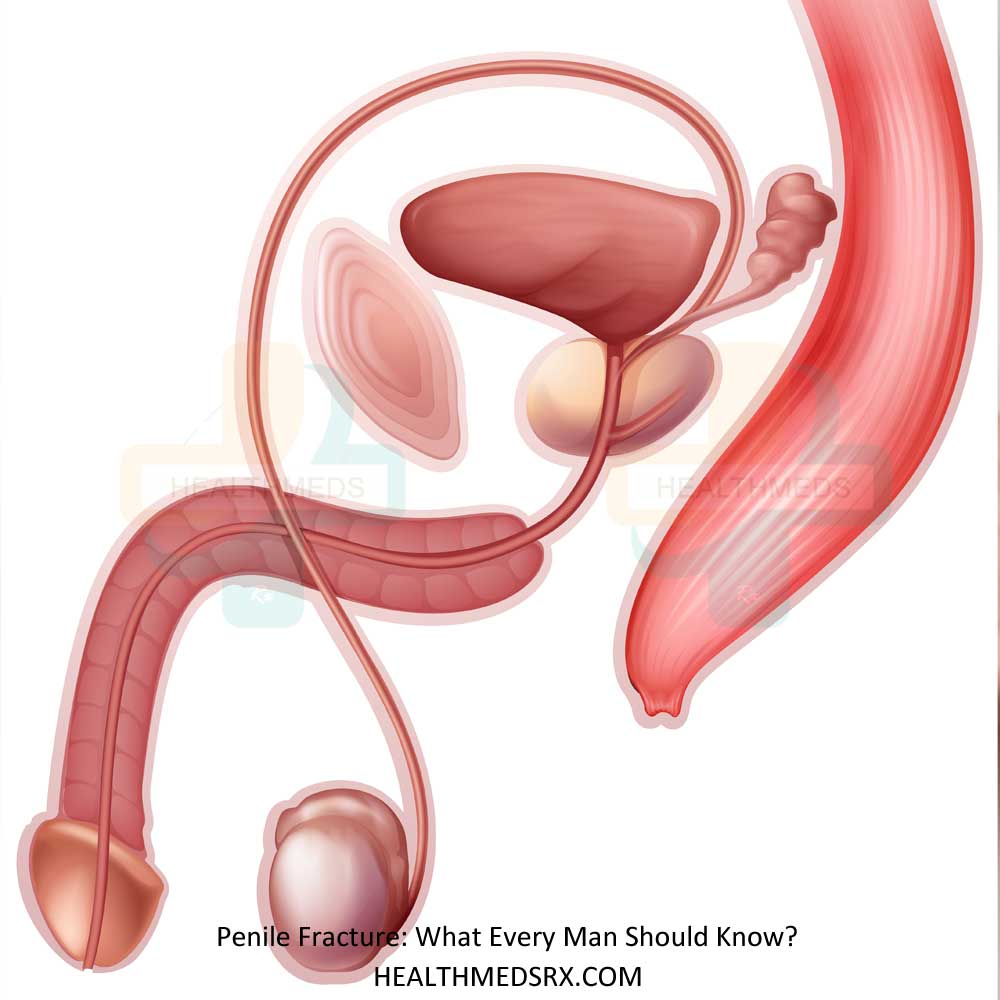

A “penile fracture” is not a generalized term, it is not an ongoing joke, nor is it something to simply shrug off when it happens- if someone experiences this injury, it is an absolute emergency. The first 24-48 hours are critical to successfully repairing the damage.
This article outlines what to do right away, what to avoid, and how soon to get immediate treatment.
What A Penile Fracture Is (In Layman’s Terms)
There’s no actual hard tissue or bone in the penis itself.
That’s why different medical professionals refer to penile fractures as either “fractures” or “tears.” “Fractures” are used to describe damaged blood vessels when the penile tissue is under heavy pressure as a result of an erection. At the edges of this tissue, known as the *tunica albuginea*, there are a number of places where the tissue is tethered to the surrounding structures. When the penis bends too far beyond its natural limit, these are usually the sites of Penile Fracture.
Once the tissue is torn, blood will escape from the damaged vessel and begin pooling in the cavernosum, causing the penis to immediately swell.
The classic signs and symptoms of Penile Fracture
Symptoms in more than one way:
- Heard or felt a loud pop or snap
- Experienced very sharp pain
- Created rapid loss of your erection
- Acquired a large amount of swelling and bruising (sometimes referred to as the “eggplant deformity”) very quickly
- Experienced visible deformity in the shape of the penis (i.e., bent, crooked, etc.)
- Experienced blood coming out of the tip of the penis
- Experienced difficulty urinating (burning with urination), and/or could not urinate at all
If you have pain, swelling, and a popping sound, consider it a Penile Fracture unless proven otherwise. If there is blood or you have trouble urinating, that would indicate a possible urethral injury and would require immediate medical attention.
What causes Penile Fractures?
A Penile Fracture typically occurs during sexual intercourse, when a person experiences slipping and hits the other person’s pubic bone or perineum and causes the penis to be sharply bent.
Other occurrences can include:
- Masturbating extremely hard or bending while doing so
- Rolling over in bed onto an erect penis
- Sustaining an unexpected blunt force significantly bending the penis to one side while erect
While this is predominantly an injury to the erect penis, it is much less likely to be a Penile Fracture when the penis is flaccid.
What to do in the emergency room for a Penile Fracture?
If you believe you have Penile Fracture, you need to do the following to reduce your risk of further injury and obtain emergency medical services.
1. Cease All Activity Immediately
- Do not “test” your penis to see if you can achieve an erection again
- Do not attempt to straighten or realign your penis. Just use good judgement and your own common sense to stop.
2. Apply a Cold Pack Gently (optional and only temporary)
Wrap a cold pack in a towel or thin cloth, use it for comfort from swelling until you can arrive at your physician’s office.
- Never place ice directly against your skin.
- Do not apply hard pressure to your penis.
- Do not apply a cold pack to your penis for an hour prior to visiting the emergency department, as it should be done only while on your way to receive care.
3. Keeping your penis supported
Find supportive undergarments (e.g., boxer briefs), or position your penis against your lower abdominal wall with kind of pressure only enough to prevent it from hanging down / being pulled while walking around. Be gentle in all of this. Forcing it into a certain position will not work.
4. Go to the emergency room immediately
Getting evaluated/often surgically repaired as soon as possible , normally results in better long term outcomes , surgery is recommended in many instances within hours. If there will be a delay, the risk for long-term consequences will go up.
5. If you cannot urinate, do not try
If you attempt to force yourself to urinate, you may aggravate the bleeding. If you discover you cannot urinate, let the ER personnel know immediately.
What NOT to do (seriously, don’t) if having Penile Fracture?
It is important to understand that many people often react instinctively. Some instinctual reactions may ultimately hurt you,
- Do not rub it.
- Do not continue to have sex, i.e., stop if it hurts.
- If you take aspirin or blood-thinners as part of your normal routine, do NOT take them unless prescribed by a doctor since they can increase the risk of severe bleeding and bruising.
- Do not attempt to compensate for your injury with the use of erectile drugs since they can create additional pressure, thereby worsening your injury.
- Do not be embarrassed about going to the ER, your injury is likely no more abnormal than someone else’s as far as what is seen by ER personnel, as they see thousands of unusual things each and every day.
Simple rule – Go to the Emergency Room if you suspect a condition is urgent.
In short, if you experience any of the signs listed below, seek medical attention right away.
- Rapid swelling followed by pain and/or deformity
- Popping or snapping sounds
- Incapable or impaired ability to have an erection after bending injury
- Blood near the opening of the urethra
- Difficulty urinating
- Continued severe pain that is not going away quickly
You should also seek emergency medical evaluation, even if symptoms seem mild. Partial tears do occur, urinary injuries may not be immediately apparent, and swelling may increase within the hour.
Avoid being surprised at the ER by knowing what to expect.
You will typically be evaluated, with a urologist on call for questions pertaining to the following:
- How did it happen, when was it heard
- Was there a pop sound
- Did you lose your erection immediately after injury
- Can You urinate, and is there any blood?
- Where is the injury causing pain and swelling?
Your medical professional may:
- Conduct a physical examination
- Conduct a urinalysis to check for blood
- Conduct imaging studies (ultrasound or MRI) but clinical diagnosis is common
- Conduct a special X-ray if there is a suspicion of urinary tract injury.
You may undergo surgery if a Penile Fracture is strongly suspected, as surgical intervention has noticeably better outcomes than the “watchful waiting” option.
The Importance of Quick Treatment (Real Long-Term Consequences)
This audience segment is where potential patients will make the decision to stop putting off treatment.
As the time from the onset of Peyronie’s disease passes, so does the overall likelihood of recovering. Delaying treatment can increase your risk of experiencing:
- Erectile dysfunction
- Penile curvature (which results from scar tissue that forms within the penis)
- Pain during an erection
- Fibrous plaque build-up and palpable lumps
- Urethral complications when the urethra is involved
Many men who have had successful reparative surgeries return to having normal sexual function. However, as Penile Fracture treatment is delayed, the likelihood of success decreases.
The basics of aftercare (what you need to do before you receive treatment, and after you’ve been treated)
One of the most critical factors leading to the success of Peyronie’s disease treatment will depend on your activity before and following your treatment.
Do not engage in any activity that would increase your chance of developing an erection, this includes:
- Engaging in sexual activity
- Masturbation
- Anything that causes an erection
- Following your treatment, you will want to carefully follow the directions provided by your urologist.
Do not rush to “come back.” This is one of those circumstances where being patient can pay off in the long run!
Additionally, it is critical to remember that there are a variety of complications associated with Peyronie’s disease, which, if left untreated, can result in serious health concerns, including chronic kidney disease. Thus, it is imperative that you seek medical care as soon as possible.
A final note, Someone needs to tell you this
If you have Penile Fracture, it is not a sign of weakness or stupidity, many men are embarrassed to admit this is possible and how often it actually occurs, however, the most typical error that leads to long-lasting damage would be waiting too long before seeking medical help because of embarrassment.
If you have experienced a “pop,”have or have not been able to urinate normally or noticed swelling in your penis, seek medical attention NOW. The discomfort you feel if you go to see a doctor will inevitably be far less than if you wait long after your injury for treatment.