
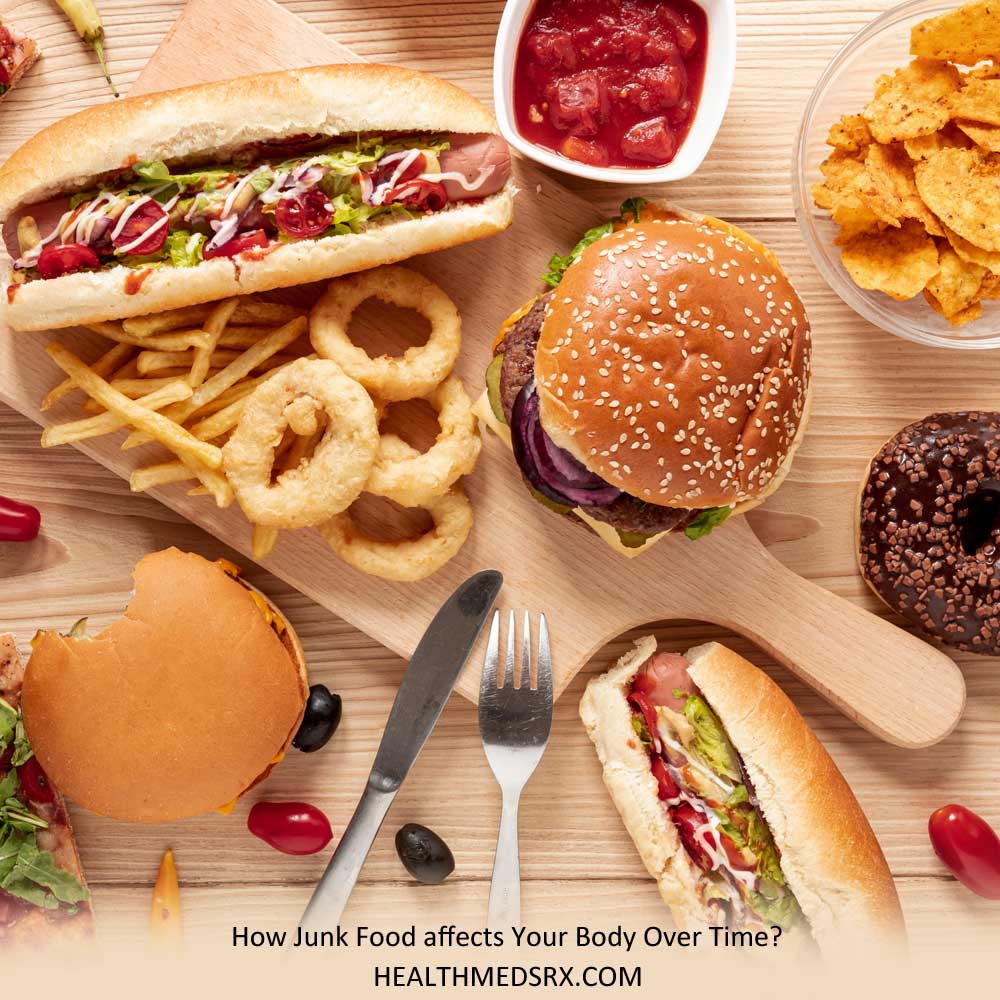

Eating junk food every day can feel like a small victory at the end of a very long day. You save time, pass on doing the dishes, and get what you desire in taste. When you’re stressed, tired, or trying to keep a handle on your spending, ordering in can feel easier than meal planning.
If you consume junk food every day your body will start showing the changes in how you feel this week, what the scale reports next month, and what your lab results look like later down the line.
What also plays a role is what you order, your portion size, and how truly “everyday” that is (one meal a day is different from all meals). Here’s what tends to happen over weeks, months, and years, plus realistic ways to lower the risks without quitting junk food.
What Happens When You Eat Junk Food Every Day? Changes You May Notice Over Time
Eating junk food every day doesn’t cause health issues overnight. It is a slow process, a little more salt here, a larger portion there and less veggies which becomes the norm for most days. In the long run those patterns add up.
Here is a timeline of what you may see when you consume junk food every day turns into you preferred choice:
| Timeframe | What you may feel | What’s happening most often |
| Same day to 2 weeks | Thirst, puffiness, energy dips, cravings | Greater sodium, refined grains, sugary beverages, low fiber. |
| 1 to 3 months | Waist size reduced, more heartburn, less consistent energy. | Extra energy, larger portions, more saturated fat. |
| 6 months to years | Higher levels of blood pressure, high LDL, increasing blood sugar. | Chronic high salt, low fiber, frequent fried or creamy foods. |
In the First Days and Weeks: Energy Crashes, Bloating, and Stronger Cravings
When you eat junk food every day what you may notice is that your energy is not the same. You order the usual burger with fries, large soda or sweet tea and what happens is your blood sugar goes up fast then comes crashing down just as quickly. That drop leaves you tired, fuzzy headed, or craving something sweet again.
Bloating is not uncommon either. Many junk foods are low in fiber and high in refined carbs (pizza crust, noodles, pastries). Fiber’s role is to move food through the gut and to make you feel full at steady manner. When it is absent digestion process in the body may slow down and you can still feel heavy even after consuming a lighter portion of a meal.
If you consume junk food every day you may see that you’re very thirsty, that your rings fit poorly, or that your face is puffy in the morning. With the increasing sodium intake salt draws water into the bloodstream and tissue in turn causing your body to retain more fluid.
Cravings increase sometimes not because you’re weak, but because many junk foods feel rewarding (fat, salt, sugar, and crunch). Also after eating junk food every day home cooked meal may taste bland, even when it is healthy.
Over Months: Weight Increase, High Blood Pressure and Blood Sugar Changes
Over time what we see is that the main issue when eating junk food every day is portion size. In terms of calorie density restaurant meals may surprise you. They don’t have to be large in size at all. With pizza nights, creamy pastas, fried chicken sets, and loaded burritos you can easily fall into a calorie surplus without even realizing it.
Blood pressure may also increase if sodium intake is too high, which is present in a wide array of junk foods like sauces, cheese, bread, pickles, soy sauce, and seasoning blends. If you order junk food every day while not getting adequate sleep, sit down a lot, and drink alcohol often, your risk increases more.
Cholesterol does fluctuate too, in particular if your go-to foods are fried, fatty meats, and cheesy options. Saturated fat causes raised LDL cholesterol in many people and it is easy to overdo it when eating junk food every day.
Blood sugar levels may not be noticeable right away. When you pair refined grains with sugar-heavy drinks your body has to produce more insulin to manage glucose. In time, cells may stop responding as well which is a sign of insulin resistance. You can increase your awareness of the early signs of insulin resistance.
A few signs to keep an eye on if you consider junk food every day is routine: a tighter waistband, more frequent heartburn, fatigue after meals, and higher readings at check-ups (blood pressure, LDL, fasting glucose).
Why Junk Food Every Day Hits the Body Hard: What’s Usually Missing and What’s Usually Too High?
Junk food every day affects you more because of what it tends to be made of and how it’s served. Many meals come with a similar nutrition pattern: lots of processed carbs, plenty of salt, added fats, and not enough leafy veggies.
Cuisine matters but the same themes repeat. Pizza is for refined crust and great cheeses. Burgers and fried chicken come with your choice of fries and sugary drinks.
With Chinese takeout you get noodles or fried rice and those salty sauces. Indian and Thai foods tend to have cream and sugar, large helpings of rice. Sandwich shops may look light but the bread, deli meat and dressings pack on the calories.
If you eat junk food every day, you’re not just eating one “bad” meal, you’re repeating the same nutrition gaps day after day.
Too Much Sodium, Saturated Fat, and Added Sugar (and Why Your Body Reacts Fast)
Sodium is what causes that quick reaction. It changes fluid balance, brings on thirst, and over time will raise blood pressure. As for saturated fat, it is an issue because it affects LDL cholesterol that leads to the result of a diet that includes a lot of fried foods, creamy sauces, and heavy cheese when you consider junk food every day.
Added sugar is a hidden enemy. It’s in your sweet drinks, flavored coffees, ketchup, BBQ sauce, and some stir-fry sauces. Sugar is in all of it. Thus it may make you eat more as it increases your appetite and the desire for more food.
Not Enough Fiber, Protein Balance, and Micronutrients (And How That Affects Gut Health)
Fiber is what you’re missing out on the most during takeout heavy weeks which are commonly junk food. It aids fullness, steady blood sugar, and regular bowel movements. Also it feeds the beneficial gut bacteria which play a role in digestion and inflammation.
Many diets that revolve around refined grains and fried sides leave you low in veggies, beans, and whole grains. An easy solution is to base your order on a lean protein plus veggies, then add carbs in a smaller amount.
In day to day life include a variety of fiber-rich root veggies for better digestion as they may serve as great side dishes that at the same time support your gut.
How Often is it Okay to Eat Junk Food? A Realistic Plan That Protects Your Health
If you are eating junk food every day what you need is not a perfect diet to feel better. You need a plan that you will see through the day.
The aim is to reduce the frequency when you can, control portions when you can’t, and improve the “default order” so that consuming junk food every day doesn’t necessarily lead to high salt, low fiber, and high sugar.
Is Junk Food Once A Week Ok? A Simple Frequency Guide You Can Follow
“Is junk food once a week ok?” For most people once a week is not a cause for problem, if you watch portions and choose well-balanced meals. Eating junk food every day has the greatest risk as you tend to repeat the same large portion orders which are not healthy.
A few times per week works for when your orders are small and the portions are moderate, also it includes lots of veggies, beans, fruits, and whole grains. If you have high blood pressure, diabetes, kidney disease, or high cholesterol you may need to play it a little safer and make more conscious choices.
Track results, not guilt. If you are eating junk food every day that leaves you bloated, thirsty, or causes you to gain weight, that is useful information. Also pay attention to your check-ups.
If You Are Eating junk Food Every Day Do These 7 Swaps To Reduce The Damage Fast
If you order junk food every day, these changes can improve the health of your habits without overhauling your life:
- Split the meal (and keep half for later) meaning small portions even when ordering junk food every day.
- Add some greens (salad, steamed veggies, roasted veggies) to the plate for fiber.
- Whenever possible choose grilling, baking, or steaming.
- Choose water or tea without sugar over soda even a few times a week.
- Order sauce on the side, while consuming only half of what you would have otherwise.
- Skip the extra cheese and fries, or pick one of the two.
- Add fruit or plain yogurt later so your day includes real fiber and protein.
One Timing Tip: Don’t wait until you are hungry. When you are famished, ordering junk food increases the likelihood of consuming larger quantities. Here is a simple weekly goal that works: start with two homemade meals this week, even if they are basic.
The Cost of Living on Junk Food
Eating junk food every day may slowly change your baseline health. You may first notice through cravings, bloat, and energy drops, and see later in terms of weight gain, higher blood pressure, and issues with cholesterol and blood sugar.
Pick out one swap this week and go with it even if you order junk food every day for now. Then set a limit on ordering junk food that you can live with. You can improve your health in the long term with small changes if implemented regularly and still have convenience.